Amazon points its first African satellite gateway at Nairobi — and the real contest with Starlink starts on the ground
With 396 satellites now in orbit, Amazon has crossed the threshold to switch on its Leo broadband service — and it wants Kenya to host its first ground station on the continent, turning Nairobi into the anchor of a rivalry that will be decided by fibre and routing as much as by rockets.
The number that mattered last week was not a rocket count but a floor: 396. That is how many low Earth orbit satellites Amazon has now placed overhead — enough, the company says, to cross the minimum threshold and begin selling commercial broadband from its Leo network, the constellation the world still knows by its old code name, Project Kuiper. Amazon retired that name on 13 November 2025 and rebranded the service Amazon Leo, a nod to the low-orbit fleet that powers it.
Crossing that line moves Amazon from the business of building a network to the harder business of running one. And the place it has chosen to plant its first African foothold is Nairobi.
Why Kenya gets the first gateway
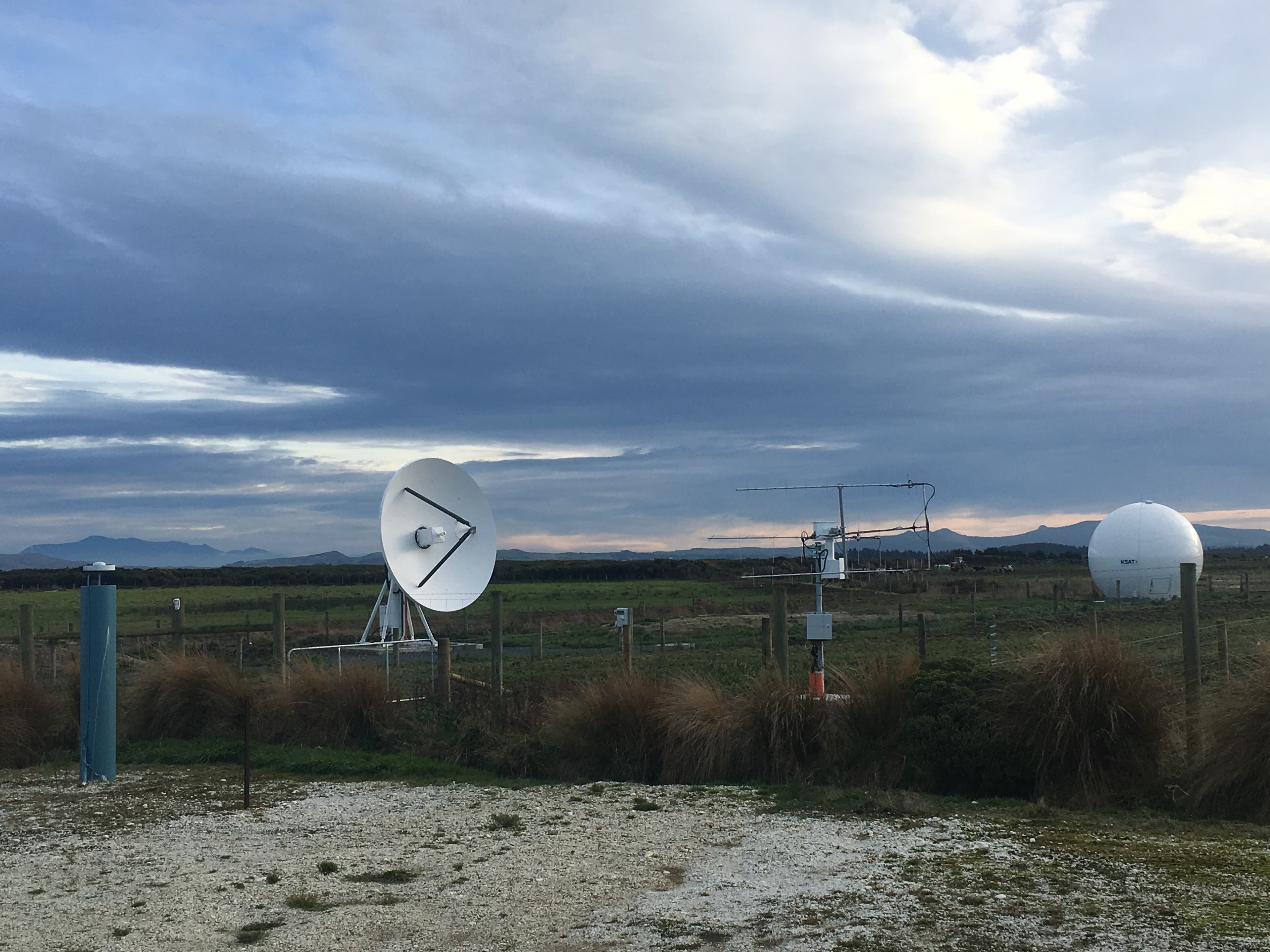
Amazon is not starting in Africa with a satellite dish for a farmhouse. It is starting with a building. Through a local subsidiary, Amazon Kuiper Kenya Limited, the company has applied to the Communications Authority of Kenya for a 15-year international gateway licence — the permission to operate the ground station that links its orbiting fleet to terrestrial fibre, reported by FurtherAfrica in June. A gateway is the unglamorous hinge of any satellite network: the point where a signal bouncing down from space rejoins the ordinary internet backbone.
Nairobi is a deliberate choice, not a convenient one. The city is an inland hub wired by terrestrial fibre to the submarine-cable landing stations on Kenya's Indian Ocean coast at Mombasa, and it sits at the centre of a decade's worth of data-centre and cloud investment. Put a gateway there and East Africa's traffic no longer has to detour through Europe before joining the global backbone — the difference, in practice, between a connection that feels usable and one that stutters.
The lesson is already written in Starlink's Kenyan experience. When Elon Musk's network switched on local infrastructure inside Nairobi, latency fell sharply — not because the satellites changed, but because the ground beneath them did. Traffic stopped travelling to distant international gateways before it could reach the wider internet. The satellites were the same; the network underneath them was not.
A rivalry measured in fibre, not launches
Amazon's constellation is designed to grow past 3,200 satellites, and the company is racing a regulatory clock — its United States licence obliges it to loft half of that fleet by July 2026. But the milestone at 396 reframes what the competition with Starlink is actually about. The early years of any low-orbit network are a launch problem: get enough spacecraft up for continuous coverage. Once customers start signing on, the problem inverts. It becomes a question of capacity and resilience on the ground.
Starlink is living that second act right now. In parts of Kenya it has paused new sign-ups because demand has outrun the capacity its network can serve — a reminder that orbital scale alone does not guarantee a good connection. Amazon is entering precisely the phase its rival is struggling through, and it is doing so a step behind: a live service, a first African gateway still awaiting a licence, and years of ground build-out ahead.
Here is the part the launch headlines tend to miss, and where Himilo Post reads the story differently. The prize in Africa is not the individual rooftop terminal — it is backhaul. A Nairobi gateway lets mobile operators lean on satellite capacity to push 4G and 5G into thinly populated regions where the economics of laying long-haul fibre or building towers never quite add up, without having to own that expensive middle-mile infrastructure themselves. In that framing, Amazon Leo and Starlink are not only chasing rural households; they are quietly becoming wholesale connectivity layers underneath the telcos most Africans already use. The winner of that contest will not be whoever launches the most satellites. It will be whoever builds the most reliable network beneath them.
What to watch next
The near-term signal is regulatory: whether the Communications Authority of Kenya grants Amazon Kuiper Kenya its gateway licence, and on what terms. A green light turns Nairobi from a line on an application into physical hardware, and gives Amazon its East African anchor for a wider continental rollout. Until then, the 396 satellites are a starting gun, not a finish line — and the more interesting race is happening on the ground, where fibre routes and internet exchange points, not orbital mechanics, will decide who Africa actually connects through.
