In a Malawi ward with one doctor for 50,000 children, an AI monitor is learning to raise the alarm first
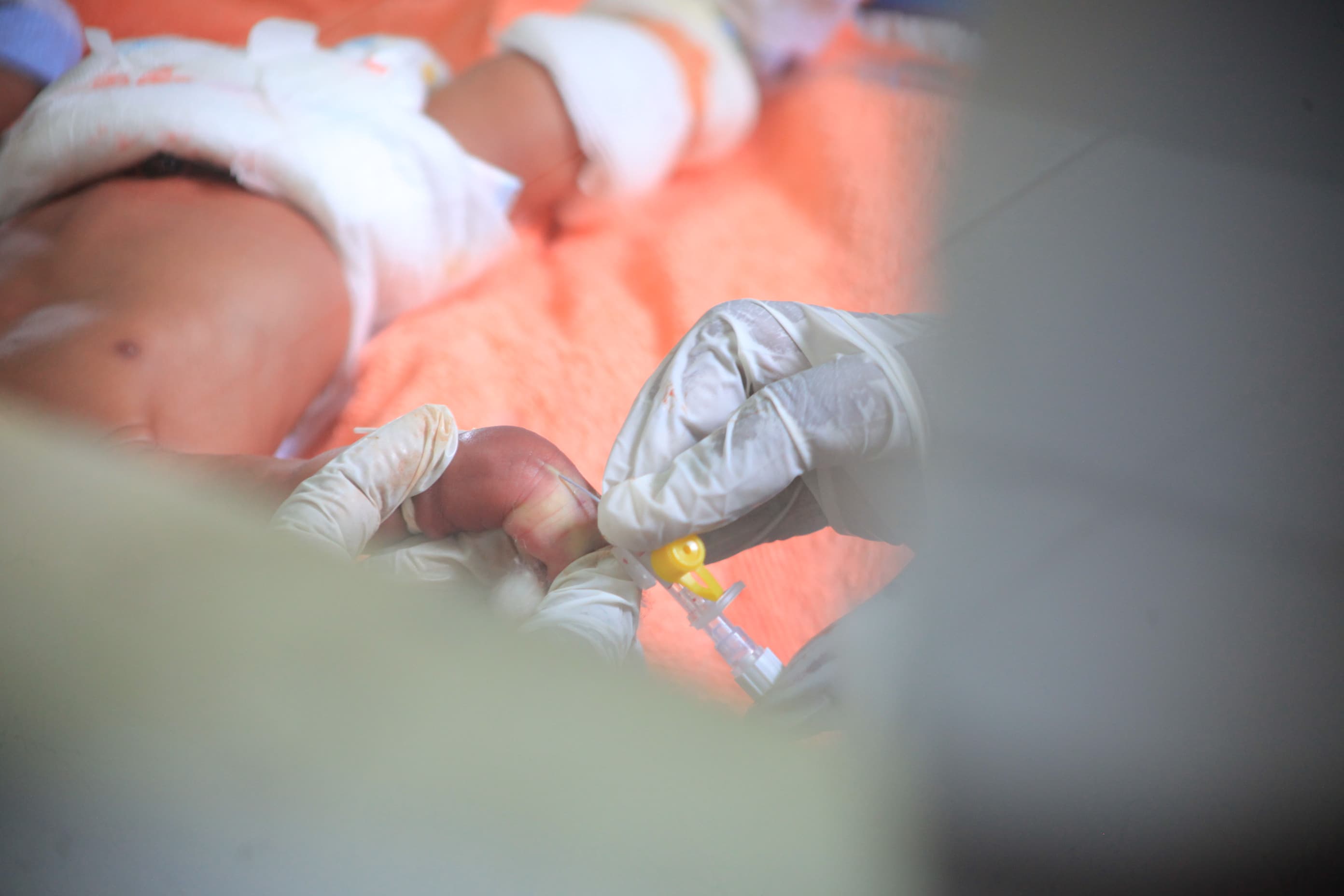
IMPALA, a Malawian-developed bedside monitor that uses machine learning to flag a child's decline up to three hours early, has cut deaths by 40–51% at two hospitals — and is now running on more than 800 monitors across six African countries.
At Mangochi District Hospital in southern Malawi, the paediatric ward once kept a grim rhythm. In a given week — sometimes over a stretch of 15 days — as many as four children would die, and often the first a doctor knew of it was a file passed across the morning handover: baby found dead, rest in peace. "I don't see these things anymore," says Dr. Jessica Chikwana, a paediatrician who has worked through that change. The register now records closer to one death in the same window.
What shifted was not a new drug or a wave of hired specialists. It was a monitor at the bedside — and, running quietly behind it, a machine-learning model trained to notice a child slipping before any human in the room can.
The device is called IMPALA, short for Innovative Monitoring in Paediatrics in Low-resource Settings. It pairs continuous vital-sign monitors with software that watches for the early signature of deterioration and pushes an alert to a nurse's tablet — a red flag to prioritise a high-risk child, an alarm when oxygen saturation falls. Its Malawian co-developer, Dr. William Nkhono, says the system can flag a decline up to three hours before it turns critical, buying the one thing an overstretched ward never has enough of: time to intervene while a child is still stable.
That window matters because of the arithmetic IMPALA was built to answer. Malawi had an estimated 0.1 doctors per 1,000 people in 2022, according to World Bank data; the World Health Organization considers 2.3 skilled health workers per 1,000 the floor for adequate coverage. The country's association of paediatricians, PACHA, puts the ratio of specialists to child patients at roughly one to 50,000, with fewer than 40 paediatricians in the entire health system. Under those numbers, "hire more staff" is not a plan that pays off this year. "More attention per staff member" is — and that is precisely what an always-watching monitor sells.
The results reported so far are striking. Comparing 2023/24 with the year before, two participating hospitals recorded 40% to 51% fewer deaths, even as they treated more patients; across the wards using it, child deaths fell by about a third. "Before we could have four deaths in a week or 15 days, but now we record maybe one death," said Blessings Juma, head of the paediatric ward at Mangochi, in an account first reported by Spanish daily El País and corroborated by Connecting Africa and iAfrica. The monitors are also designed to keep running through Malawi's frequent power cuts — a detail that decides whether any of the above survives contact with a real district hospital.
The economics are the quietly radical part. IMPALA's makers say the system costs about 16% less than the conventional monitoring devices it stands in for, and it changes what nurses spend their hours doing. "Previously, when we talked of vital signs, it was simply just a check of temperature," said Gift Mhango, a paediatric nurse at a community hospital in Kapiri. "With the tablet present, you can be taking care of another child at the same time and have an eye looking at the tablet." One monitoring app can hold up to 30 patients on a single screen; discharge processes that once took up to three hours now run in about 1.8. The device does not add beds or nurses. It adds a louder signal when a child's oxygen starts to fall — and lets scarce clinicians act on exceptions rather than walk the ward measuring everyone by hand.
Here is the part worth sitting with, and it is Himilo Post's read rather than a claim in the record: this is not imported technology doing Africa a favour. IMPALA was developed in Malawi, through a consortium that includes Kamuzu University of Health Sciences and the Malawi University of Business and Applied Sciences alongside European partners such as Imperial College London, Amsterdam University Medical Center and the Dutch health-tech venture Goal 3. The model was trained on the patients it now serves. That origin story is the compounding asset. A monitor that learns from Malawian wards encodes Malawian clinical reality; every hospital added widens the dataset, and a wider dataset sharpens the next alert. Nkhono already points beyond vital signs — to detecting birth asphyxia from an infant's cry, or diabetic retinopathy from an image — the kind of diagnostic reach that normally requires a specialist who isn't there.
The scale is no longer a pilot's. IMPALA is now installed on more than 300 monitors across over 20 hospitals in Malawi, and on more than 800 monitors in over 50 hospitals across sub-Saharan Africa — Tanzania, Rwanda, Kenya, Zimbabwe and Gabon among them. The obvious caution is that a mortality curve bent in two hospitals over one year is a beginning, not a proof for a continent, and its backers say as much: the gains have to hold as the network grows and as governments, not grants, take on the running costs.
But the direction is the story. In wards where the binding constraint is human attention, a cheap, locally trained model that never looks away is not a gadget. It is a way to make the doctors a country does have count for far more than their number — and, on the evidence from Mangochi, to turn a handover file that used to end in "rest in peace" into a child who goes home.
