Kenya asks the public to help write its AI rulebook, again
A 226-page draft policy would force Kenyan firms to disclose AI decision-making by 4 August, but it sits alongside an unrelated Senate bill with its own AI regulator and penalties - and the two still do not talk to each other.
Two hundred and twenty-six pages. That is the length of the document Kenya's Ministry of Information, Communications and the Digital Economy quietly published for public comment on 24 July, and it is due back with real answers within days: written submissions on the draft Kenya Artificial Intelligence and Other Emerging Technologies Policy close on 4 August, according to the ministry's own public-participation notice.
The headline provision is a simple one. Any company operating in Kenya that lets an algorithm act in place of a human - a bank's credit-scoring model, an insurer's claims processor, a telecom's customer-service bot, a hospital's triage tool - would have to say so, plainly, to the person on the other end. "Individuals are entitled to know when an AI system is acting on them," the draft states, extending to any case where automated systems "materially shape" a decision that affects someone's rights or access to services.
That single sentence would touch a wider swath of Kenyan business than almost any tech regulation in the country's history. Banks and insurers have spent the past two years quietly wiring generative AI into fraud detection, credit decisions, and customer support - largely, as TechCabal's Adonijah Ndege reported on 29 July, without telling customers a machine was on the other end of the interaction. The ministry's own framing makes clear the disclosure rule exists precisely because that quiet rollout has already happened; it is catching up to a market, not getting ahead of one.
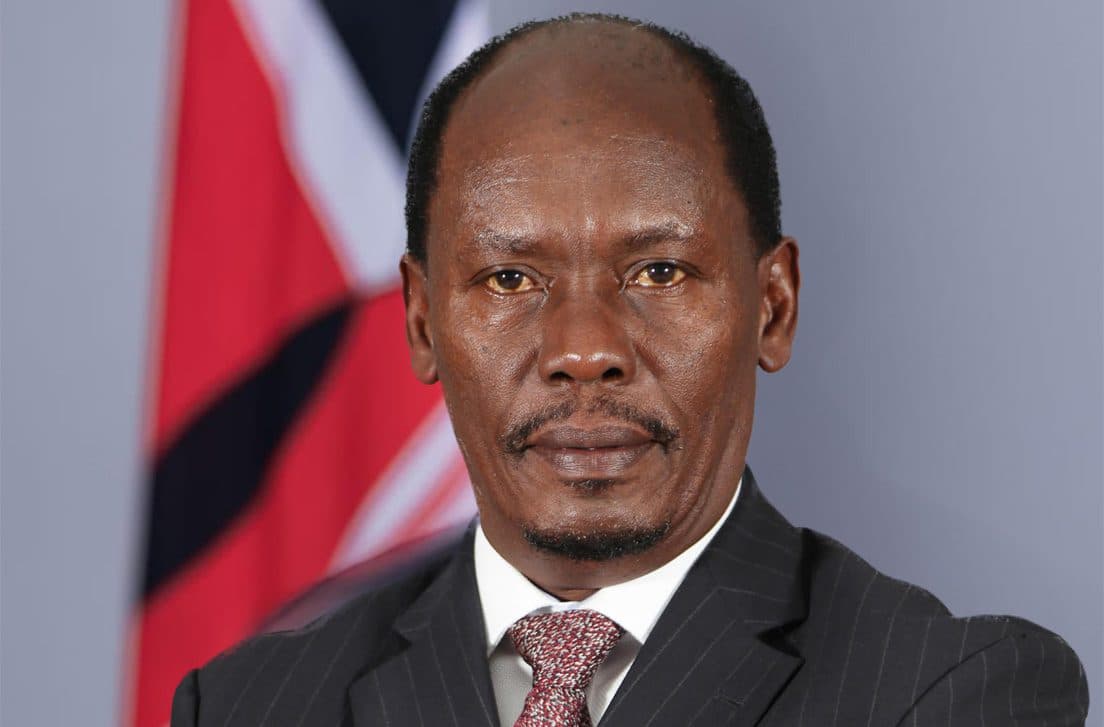
William Kabogo, the Cabinet Secretary steering the process, has cast the exercise in almost civic terms. "As Government, we are committed to ensuring that our AI journey is guided by the voices of the people," he said in the ministry's own call for submissions, carried by Top News Kenya on 28 July. It is an appealing frame for a policy that, on paper, gives ordinary Kenyans ten days to shape how the technology touches their bank accounts, hospital visits, and job applications.
But step back from the disclosure headline and a messier picture appears - one that reveals less about AI ethics and more about how governments actually legislate emerging technology. This 226-page policy is not Kenya's only live AI-governance track. Since February, an entirely separate Artificial Intelligence Bill, 2026 - sponsored by nominated Senator Karen Nyamu after AI-generated images of her circulated online, and confirmed via DataGuidance's independent regulatory tracking - has been moving through the Senate. That bill proposes its own enforcement body, the Office of the Artificial Intelligence Commissioner, with the power to investigate complaints, issue fines of up to KES 5 million (roughly $40,000), and jail offenders for up to two years over harmful synthetic content.
The draft policy from the ministry does not reference the Senate bill by name, and according to Carrington Malin's Africa AI News analysis of the document, it does not appear to seek alignment with it. Where the Senate's bill would install a standalone Commissioner's office, the ministry's policy folds enforcement into a broader National AI and other Emerging Technologies Council, split across five directorates covering everything from compliance to environmental sustainability. Two branches of the same government, drafting two different answers to the same question - who polices an algorithm that discriminates, or misleads, or gets it wrong - within five months of each other.
This is not necessarily bad-faith duplication. Kenya's Senate ordered the ministry to produce a national policy back in March, specifically because the AI bill's momentum exposed how thin the country's governance framework actually was. A High Court order from February, responding to a petition over regulatory delay, added legal pressure of its own. The ministry's document is, in a real sense, the government trying to answer a court and a legislature at once - and doing so on a timeline that left little room to reconcile the two efforts before publishing.
For the businesses this policy will bind, that lack of reconciliation is the practical problem. A Nairobi fintech building a credit-scoring model does not know today whether it will eventually answer to a ministry-run Council or a Senate-created Commissioner, what the actual disclosure threshold will be for "materially shaping" a decision, or what penalty structure will apply if it gets the disclosure wrong - the current draft leaves all three questions to "future implementing regulations." That is the normal texture of a policy still in consultation. It is also, for a compliance officer trying to plan a 2027 budget, close to no information at all.
The deeper significance for the rest of the continent is less about Kenya's internal turf lines and more about sequencing. Nigeria currently holds Africa's top spot in the Global Index on Responsible AI, a ranking built substantially on the strength of its written frameworks - but the index's own authors have warned that framework adoption and real enforcement are two different things, and that gap is wider in the Global South than anywhere else. Kenya's draft policy, read next to its own unreconciled Senate bill, is a live illustration of exactly that gap: two credible, well-intentioned governance efforts, moving in parallel, with no public evidence yet that they will resolve into one coherent rulebook before either becomes binding. The technology is compounding faster than the paperwork that is supposed to govern it - and until 4 August, at least, the public comment window is where that mismatch is still fixable.
