Renaissance Strikes Oil at OML 74, Nigeria's First Major Discovery Since the Shell Handover
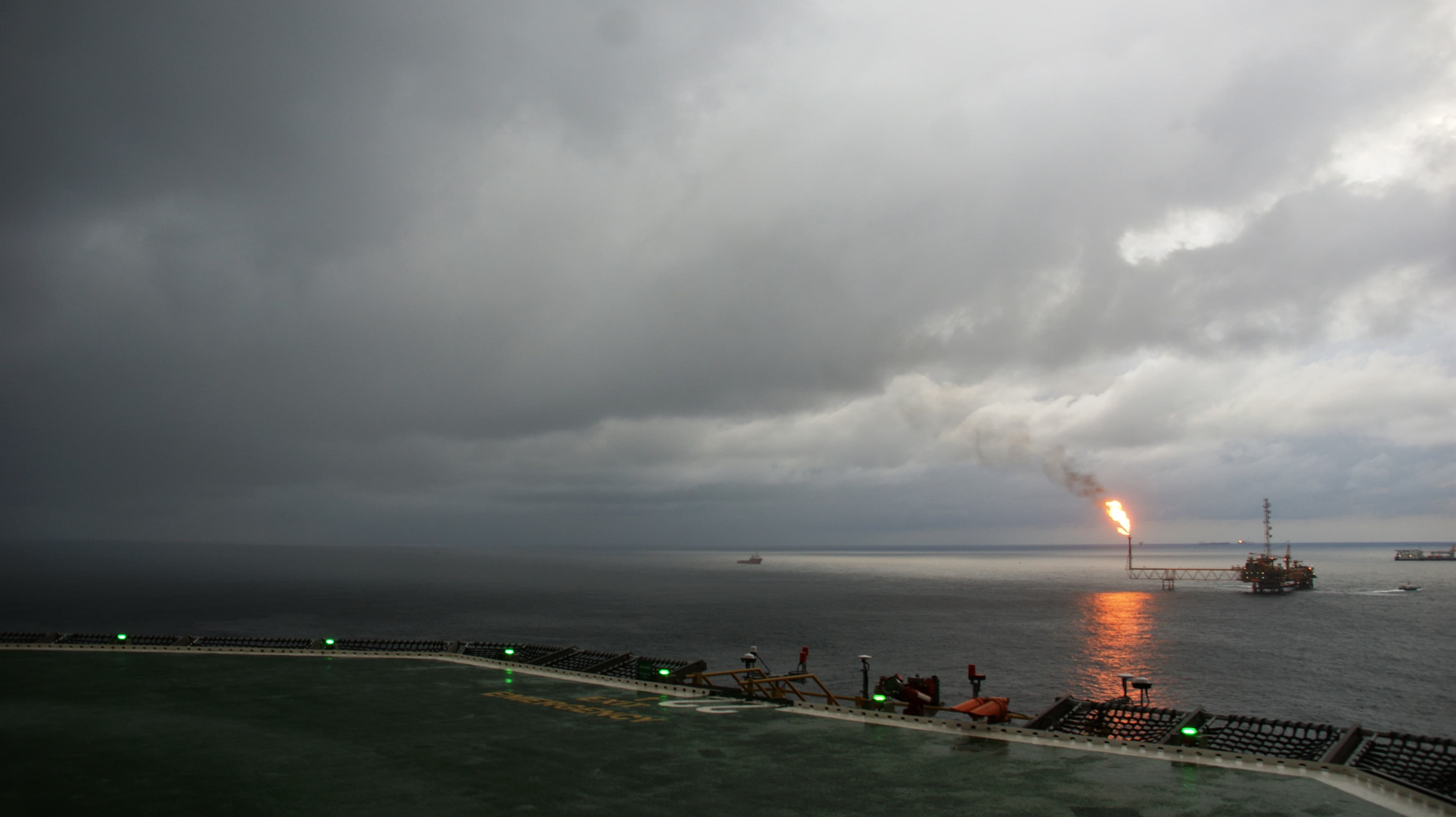
A 1,000-foot, seven-reservoir light-oil find offshore Nigeria is the clearest signal yet that the indigenous consortium that bought Shell's onshore empire can actually explore, not just extract.
ABUJA — The stage at NOG Energy Week was set for the usual round of speeches when Nigeria's Minister of State for Petroleum Resources, Sen. Heineken Lokpobiri, delivered news that upstaged the agenda: Renaissance Africa Energy Company had found oil.
The company's JK-004 exploration well, drilled in shallow water inside Oil Mining Lease 74 off the eastern Niger Delta, encountered roughly 1,000 feet of hydrocarbon-bearing rock spread across seven separate reservoirs. Initial log readings and fluid tests point to light crude in high-quality reservoir rock — the kind that flows easily and commands a premium at market. Renaissance disclosed the result in a statement Tuesday, and Reuters, World Oil and Nigeria's Businessday independently confirmed the same figures: 1,000 feet, seven reservoirs, light oil, no other technical detail released.
What makes JK-004 matter beyond the geology is who found it. Renaissance is the Nigerian-led consortium — ND Western, Aradel Holdings, First E&P, Waltersmith and international partner Petrolin — that completed a $2.4 billion buyout of Shell's onshore and shallow-water assets in March 2025, ending a business relationship that had run for nearly a century. That deal, blocked once by regulators before finally clearing, transferred operatorship of Nigeria's largest upstream joint venture, alongside NNPC, TotalEnergies and Italy's Agip Energy and Natural Resources, into local hands. JK-004 is the first exploration well the new owners have drilled and found oil with since taking the wheel.
"The success of JK-004, just over one year after assuming operatorship of these assets, demonstrates the strength of our exploration programme," Renaissance CEO Tony Attah told the Abuja conference, thanking the Nigerian Upstream Petroleum Regulatory Commission and NNPC leadership for what he called a supportive environment for the work. Renaissance's exploration chief, Johnbosco Uche, added that the well's location near existing producing infrastructure means it could reach production faster than a stranded discovery would — tie-back to nearby facilities, rather than a standalone platform and pipeline, is the difference between a two-year and a five-year path to first oil.
The find lands at a delicate moment for Nigerian production. Crude output briefly slipped below one million barrels a day in 2022 as pipeline theft, ageing infrastructure and years of underinvestment compounded each other; the current government has since rebuilt fiscal terms and cut approval timelines in an effort to reverse the slide. OML 74 itself is not virgin territory — it holds at least eight previously undeveloped discoveries dating back to Shell's tenure — which is precisely the point. Western majors spent the last decade retreating from Nigeria's onshore and shallow-water fields, judging the assets too politically and logistically complex to be worth further exploration spending. Renaissance's bet is the opposite: that a domestic operator with local knowledge, faster decision cycles and a direct stake in Nigeria's reserve base can extract value the outgoing majors left on the table.
That bet is now Africa's dominant upstream story for a different reason. Rystad Energy's 2026 exploration outlook put the continent on pace for roughly 40% of the world's high-impact wells this year, concentrated in Namibia's Orange Basin and the Gulf of Guinea — nearly all of it operated by international majors chasing frontier, undrilled basins. JK-004 is a different kind of African exploration story: not a frontier discovery opening a new basin, but a mature Niger Delta lease, worked by Nigerians, yielding a result methodical enough to matter for reserve replacement without needing a headline-grabbing barrel count to justify it. If Renaissance can convert JK-004 into production on the accelerated timeline its own geologists are promising, it becomes the case study other African governments cite when they push international majors to sell mature assets to homegrown consortiums rather than write them off.
Renaissance has not disclosed estimated reserve volumes for JK-004, appraisal well plans, or a target date for first oil — all of which will determine whether this discovery becomes a footnote or a flagship. The company said only that maturation work is underway. Nigeria's upstream regulator, for its part, called the discovery proof that its post-reform environment is working as intended; whether the next twelve months bring a firm development plan will be the real test of that claim.
