The company that lit up rural Madagascar now wants to do it for 10 times as many people
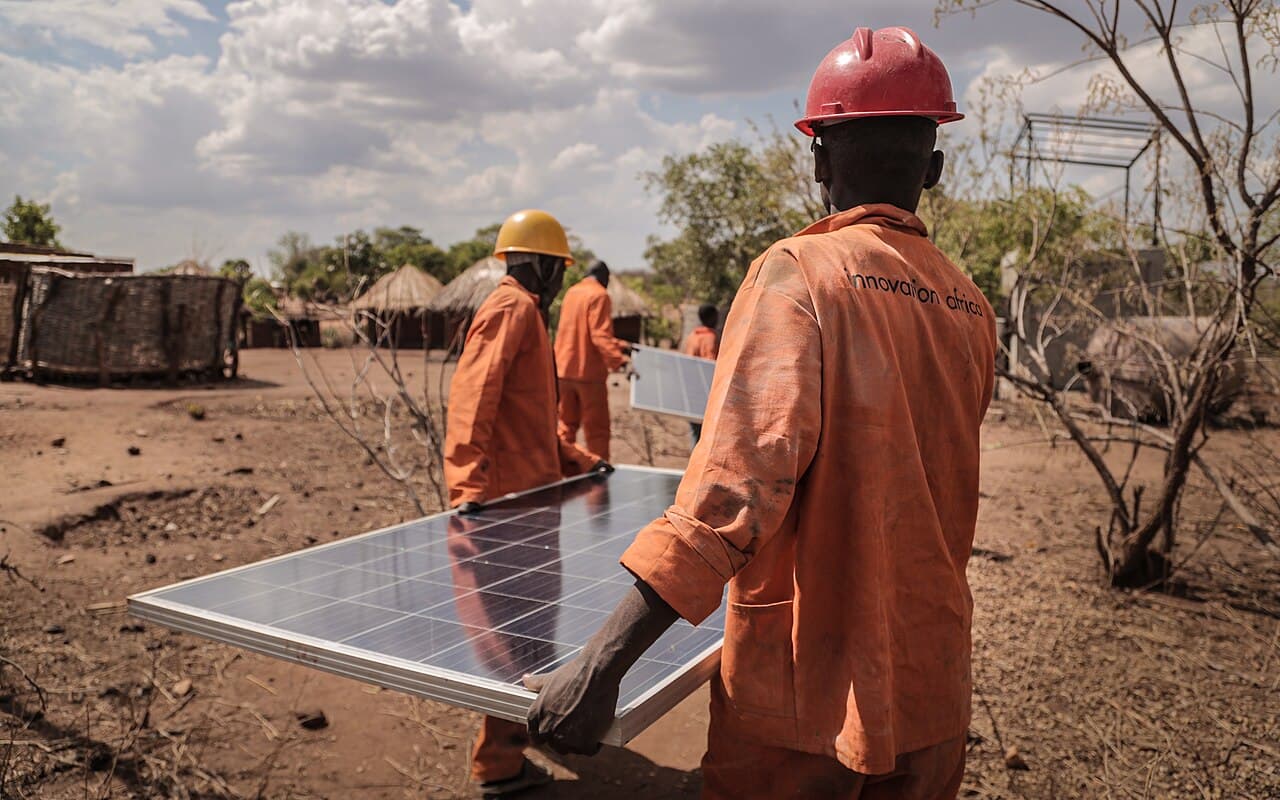
WeLight, the largest solar mini-grid operator in Africa, is raising $650m to grow its customer base tenfold to one million connections by 2030 — and it's aiming straight at Nigeria and DR Congo, home to the world's two biggest electricity-access gaps.
Around 65,000. That is roughly the number of households and businesses WeLight currently wires to electricity, almost all of them in the villages of rural Madagascar — an island where, until a solar panel and a battery arrived, the day ended when the sun went down. It is a modest number for a company that calls itself the largest solar mini-grid operator on the continent. WeLight intends to make it look tiny.
The Paris-based firm said on 6 July that it is assembling a $650 million expansion designed to grow the number of people it serves tenfold and reach one million connections by the end of the decade, chief executive Romain de Villeneuve told Bloomberg. The plan is unusually specific about where that money goes — and the destinations say as much about Africa's electricity problem as any statistic could.
Roughly $450 million is earmarked for Nigeria and the Democratic Republic of Congo. The two countries are not random picks; together they account for about 170 million of the more than 560 million people in sub-Saharan Africa still living without power, the largest access deficits anywhere on Earth. Nigeria alone leaves an estimated 90 million people off the grid, and even those nominally connected endure a supply so unreliable the national system collapsed twice in a single week this January. The remaining $200 million will deepen WeLight's existing operations in Madagascar and Mali and open a fifth, still-unnamed market.
Why mini-grids, and why now
A solar mini-grid is a deliberately small idea that scales. Panels charge a bank of batteries during the day; a local distribution network and a prepaid smart meter in each home do the rest, letting a family buy power from their phone in the amounts they can afford. Crucially, none of it waits on a transmission line marching out from a distant capital — the economics of extending a national grid to a remote village of a few hundred people rarely work, which is exactly why those villages stayed dark for so long. WeLight already runs close to 190 such installations serving more than 800,000 people across Madagascar and Mali, and the model has proven durable enough to attract patient, institutional money rather than aid.
That is the part worth watching. Last month the International Finance Corporation, the World Bank Group's private-sector arm, bought a stake alongside WeLight's founding shareholders — Axian Group, Sagemcom and Norfund — the first new investor since the company launched in 2018, in a $31 million round tied to the Nigeria and Congo push. De Villeneuve expects to raise about half of the $650 million from dedicated distributed-renewable-energy funds such as the World Bank-backed DARES programme in Nigeria and the Mwinda Fund in Congo, with the rest from equity and concessional debt. "Private money cannot finance everything," he said — a candid line that doubles as the thesis: the capital stack only closes when public de-risking and private operators pull in the same direction.
What makes this more than one company's growth story is the compounding underneath it. Off-grid solar has quietly crossed the threshold where each new market is cheaper to enter than the last — battery prices have fallen, hardware has standardised, and a decade of Madagascar operations has turned rural electrification from a pilot into a repeatable playbook. A tenfold jump that would have sounded reckless in 2018 now reads as an operating plan. WeLight's target also slots neatly into Mission 300, the joint World Bank and African Development Bank drive to connect 300 million Africans by 2030; one million connections is a rounding error against that goal, but it is a real, financed, private-sector rounding error, and those have been scarce.
The hard part is still ahead. Nigeria and DR Congo are not Madagascar — bigger, more complex, with their own regulatory thickets, though Nigeria did raise its mini-grid capacity ceilings this year in a bid to invite exactly this kind of build-out. Announced funding is not deployed funding, and a plan to serve one million people by 2030 will be judged on meters installed, not press releases. But the direction is unambiguous: the most reliable way to close Africa's power gap may not be the grand national grid at all. It may be ten thousand small suns, switched on one village at a time.
