African languages are AI's biggest blind spot. A wave of small models is closing it.
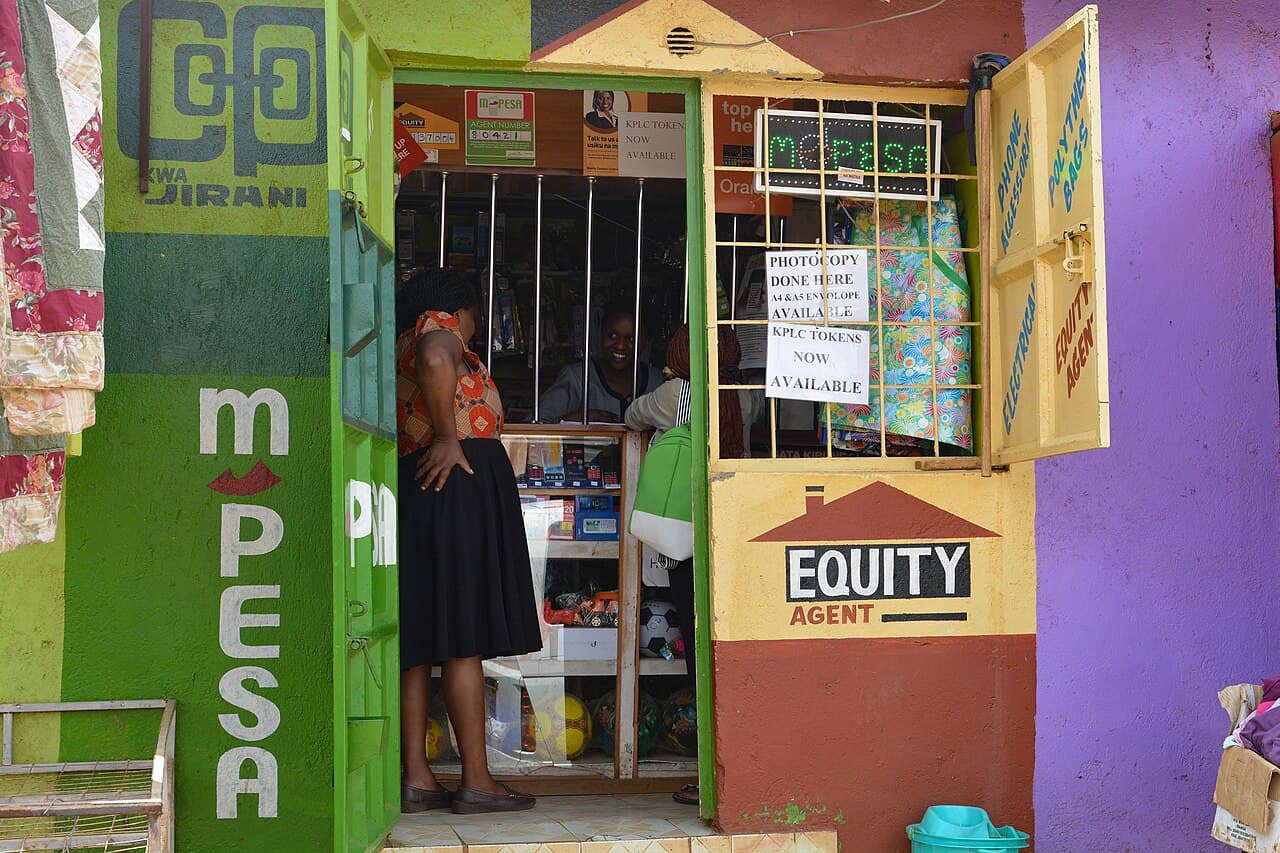
Frontier chatbots barely speak the languages of a fifth of humanity. A cohort of African builders — led this month by AethexAI's $3 million raise — is turning that blind spot into a business, with small models tuned for dialects, code-switching and the phone call.
Ask one of the world's frontier chatbots to hold a natural conversation in Nigerian Pidgin, Hausa or Kinyarwanda, and it will stumble — sliding into stiff English, inventing words, or missing the effortless code-switching between languages that defines how hundreds of millions of Africans actually speak. For an artificial-intelligence industry now measured in trillions of dollars, the languages of nearly a fifth of humanity remain a rounding error. For a small but growing cohort of African-focused builders, that blind spot is the entire opportunity.
The clearest recent signal came in early June, when AethexAI, a voice-infrastructure startup, closed a $3 million pre-seed round to build AI that answers the phone in the languages and dialects its users grew up speaking. The round was led by 4DX Ventures, with Enza Capital, Dorm Room Fund, Mojo Ventures and the Stanford GSB 26 Fund joining, alongside a roster of angels that included telecom executives, Stanford faculty and working AI researchers. The founders, Mariama Diallo and Ayooluwa Odemuyiwa, assembled a team drawn from Meta, Stanford and Goldman Sachs — the kind of pedigree that usually chases the glossier end of Silicon Valley, pointed instead at a call centre in Lagos.
That choice of problem is the point. Across much of Africa and the Middle East, customer service is not a chat window; it is a phone call, often over a patchy 2G line, often in a language no off-the-shelf model handles well. AethexAI's answer is a family of deliberately small models it calls Kora — ranging from 300 million to 1.7 billion parameters, a fraction of the size of the giant systems that dominate headlines. The company says it trained them on anonymised call-centre recordings, radio-station audio and data annotated by university students, precisely the local, spoken, messy material that the web-scraped giants lack. The economics follow the engineering: AethexAI says it now handles more than 17,000 calls a day, at prices starting around $0.03 a minute against the $0.10-plus many Western voice systems charge.
Strip away the specifics and a thesis emerges that Himilo Post has argued before: in African AI, the winning move is rarely to build a bigger model than OpenAI or Google. It is to build a smaller, cheaper, sharper one for a market and a language the giants have no commercial reason to serve. A 1.7-billion-parameter model that understands Yoruba code-switching on a bad phone line and runs at a third of the cost is not a lesser product — for a Lagos bank or a Nairobi lender, it is the only product that works. This is the compounding edge: every hour of local audio, every annotated dialect, every telecom partnership deepens a moat that a general-purpose lab in California cannot easily cross.
The uncomfortable counterweight is where the money still goes. By recent counts, roughly nine in ten dollars of Africa's AI funding land in just five countries, and the continent's broader startup capital clusters heavily in Kenya, Nigeria, South Africa and Egypt. The talent and the problems are continental; the cheques are not yet. A pre-seed round measured in single-digit millions, however smart, is not the same as the infrastructure spending now being announced by hyperscalers building data centres on the continent.
Still, the direction is set. The most valuable African AI companies of the next decade are unlikely to be the ones that sound most like their American counterparts. They will be the ones fluent in the languages, price points and network conditions that define how the continent actually lives and does business — the parts of the problem the giants skipped. AethexAI is one bet on that future. It will not be the last.