Egypt and Rwanda move to sign an AI pact — a test of whether Africa can set its own rules
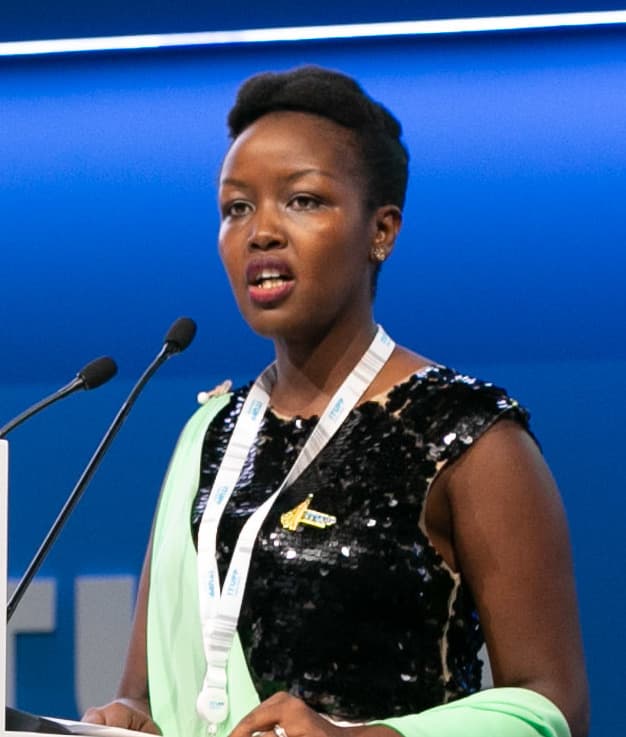
In Cairo on June 29, the continent's two most aggressive digital-government players agreed to draft a memorandum on artificial intelligence, aiming to build a shared African position before the rules are written elsewhere.
Two of Africa's most determined digital-government players have agreed to write down what has, until now, been mostly talk. On Monday, June 29, in Cairo, Egypt's Minister of Communications and Information Technology, Raafat Hindi, received Rwanda's Minister of ICT and Innovation, Paula Ingabire, and the two agreed to draft a memorandum of understanding (MoU) covering artificial intelligence (AI), digital transformation and digital skills. Rwanda's ambassador to Egypt, Dan Munyuza, attended the meeting.
The agenda was specific in a way these bilateral photo-ops usually are not. Both sides said they want to move from policy dialogue to pilot projects with "measurable outcomes" in four priority sectors: healthcare, agriculture, local languages and government services. They also discussed wiring together their respective research and innovation institutions — on the Egyptian side, the Egypt University of Informatics, the Applied Innovation Center and the Information Technology Institute — so that cooperation runs through universities and labs, not just ministries.
Why it matters
The headline is not the MoU itself. It is who is signing it and what they are trying to coordinate. Egypt and Rwanda are not swapping aid; they are two governments that already run national AI strategies trying to agree on a common position before the global rules of AI governance are set without them. Both explicitly framed the talks around "shaping unified African positions" in regional and international forums — the language of a bloc that wants a seat at the table, not a line in someone else's white paper.
Each brings a real asset. Egypt is building sovereign, Arabic-rooted AI: its Applied Innovation Center is developing generative applications on "Karnak," a large language model grounded in Egyptian and Arab identity, and the country sits on the African Union's AI Working Group and the AI Council of the Smart Africa Alliance. Rwanda, through Ingabire — an MIT-trained engineer who coordinated the creation of Smart Africa and the Kigali Innovation City — has spent a decade turning a small economy into a continental convening point for digital policy. One has scale and a model; the other has the diplomatic machinery and a governance brand. That is a more complementary pairing than the usual bilateral handshake.
The exponential-growth lens
Here is the compounding dynamic no incumbent frames well: for AI, the unit that matters may not be the country but the bloc. A single African market rarely has the data volume, the compute budget or the negotiating weight to shape how foreign models are trained, licensed and regulated on the continent. Coordinated markets do. If Egypt's model work and Rwanda's convening power become a template — shared pilots in local languages, common data-governance rules, a joint stance in AU and Smart Africa forums — the marginal cost of the next country joining falls, while the collective bargaining power rises. That is the flywheel behind every successful standards bloc, from GSM in mobile to the EU in data protection. Africa has 54 countries and, so far, 54 fragmented AI conversations. The value is not in any one MoU; it is in the first two credible players agreeing on a format the others can copy.
The caution is equal to the promise. This is an agreement to draft an agreement — no signed MoU yet, no budget, no timeline, no named pilot. Africa's diplomatic record is littered with memoranda that never became infrastructure. The test is execution: whether "measurable outcomes" arrive as a shipped healthcare or agriculture pilot, or evaporate into another communique.
What's next
Watch for three things. First, the signed MoU — its scope, and whether it carries funding and deadlines or stays aspirational. Second, the first concrete pilot: a deployed AI tool in health, agriculture, local-language processing or government services is the proof that this is building, not just talking. Third, the multilateral move — whether the Egypt-Rwanda framework is folded into the Smart Africa AI Council and the AU's working group as a reusable template, which is what would turn a bilateral handshake into continental leverage. If those land, June 29 will read as an early marker in Africa's attempt to be an author of AI rules rather than a subject of them.
*Reporting is drawn from The New Times (Rwanda), Egypt Today, Daily News Egypt and the Egyptian State Information Service. Himilo Post's "exponential-growth lens" is our analysis, not reported fact.*
