Abidjan invites Starlink in on a 12-month leash — and turns Côte d'Ivoire into Africa's satellite proving ground
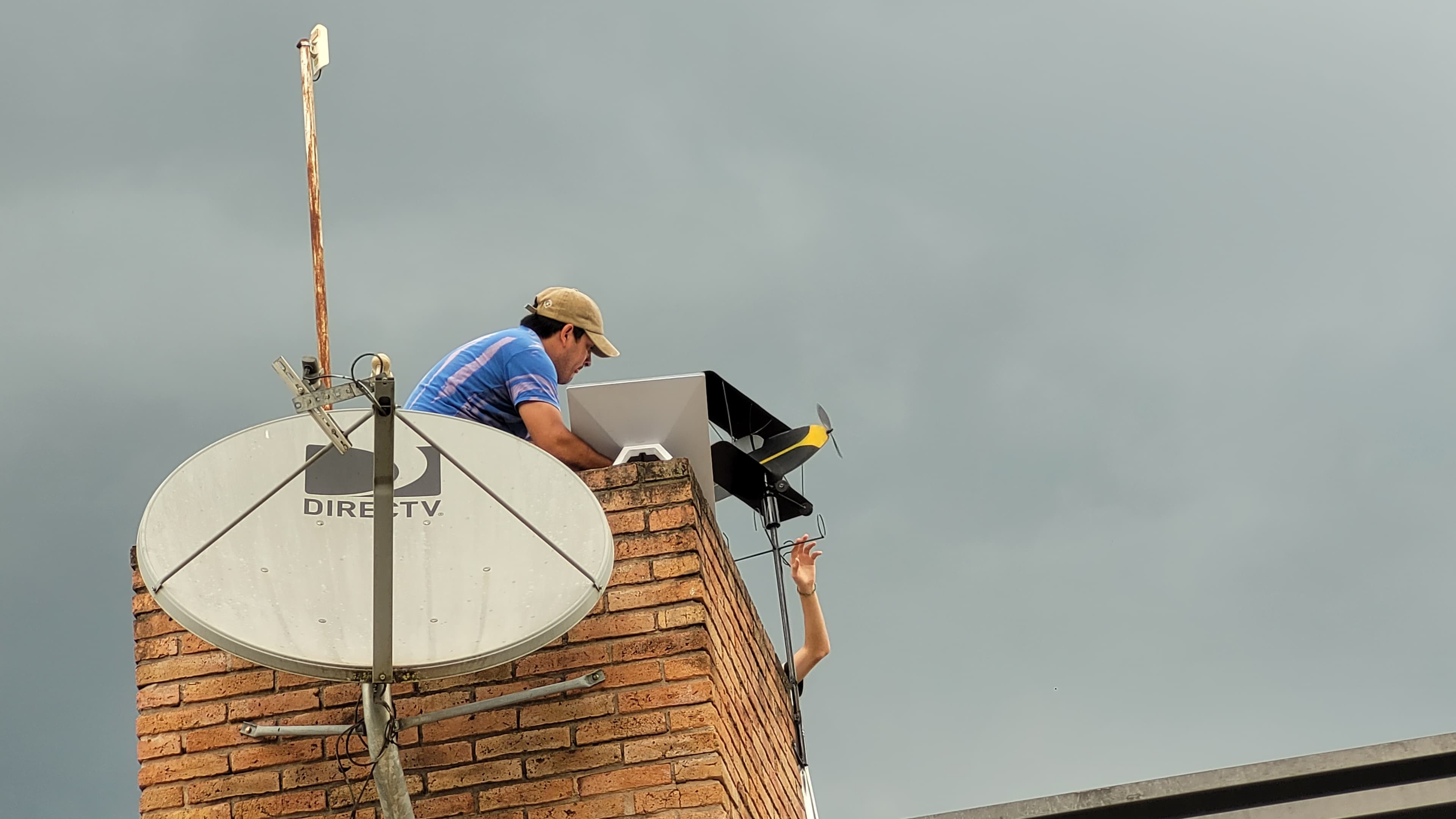
Côte d'Ivoire has cleared SpaceX's Starlink to sell fixed satellite internet from July, becoming roughly the 28th African market to open its skies. But Abidjan is not rolling out a red carpet — it granted only a 12-month provisional licence with fees tied to local revenue, launched 5G the same month, and dropped Starlink into a market where Orange and MTN already sell satellite broadband. The result is the continent's most instructive test of how a state absorbs low-Earth-orbit connectivity on its own terms.
Most African governments have met Starlink at one of two extremes: a hard no, or an open door. Côte d'Ivoire has chosen a third path — a door held ajar, with a timer running.
Abidjan's telecoms regulator, the Autorité de Régulation des Télécommunications/TIC de Côte d'Ivoire (ARTCI), has cleared SpaceX's Starlink Network CIV to begin selling fixed high-speed satellite internet across the country from July, making Côte d'Ivoire roughly the 28th African market to open its skies to the low-Earth-orbit (LEO) constellation. Djibril Ouattara, the Minister of Digital Transition and Technological Innovation, confirmed the approval during the government's Gouv'Talk dialogue series, framing it around the familiar promise: reaching "remote rural areas, schools, and health centres that previously lacked internet access."
The promise is real. Internet penetration in Côte d'Ivoire stood at roughly 40.7% at the end of 2025, and while the state counts 95% territorial coverage across fibre, fixed broadband and 2G-to-4G mobile, the gaps that remain are exactly the low-density, hard-to-wire places a satellite dish serves best. Abidjan has committed to bringing GSM mobile service to every locality of more than 800 people within four years; Starlink is a shortcut past the parts of that map where laying cable never pencils out.
What makes this launch worth watching, though, is not the coverage story. It is the licence.
Rather than the sweeping, open-ended authorisations that waved Starlink into earlier markets, ARTCI issued a 12-month provisional licence — a probation, not a permanent seat. The transition to a definitive authorisation is explicitly conditional, tied to an evaluation of service quality and the company's structural impact on the domestic market. Crucially, the permanent fee structure will be pegged to Starlink's actual revenue generated inside the country. That single clause reframes the deal: it is designed to stop a foreign operator from vacuuming subscription income out of the economy without paying proportionally back into it. The frequency authorisation itself — spanning Ka-band and V-band spectrum — carries a hard technical string attached: Starlink must run software-defined radio systems that let ARTCI remotely monitor its signals and disable specific frequencies if it chooses.
Here is the compounding move that outsiders tend to miss. Côte d'Ivoire is not treating satellite access as a binary switch to flip; it is treating it as a variable to tune. By keeping the licence provisional and the fees revenue-linked, the state converts a one-off market opening into a live feedback loop — twelve months of real operational data on pricing, uptake and effect on incumbents before it commits to anything lasting. That is regulatory posture as infrastructure strategy, and it travels: every West African regulator now watching Abidjan gets a template for absorbing LEO connectivity without surrendering leverage.
Starlink also walks into a fight that did not exist in its earlier African beachheads. Where Nigeria and Rwanda handed it a near-empty satellite field in 2023, Côte d'Ivoire's segment is already contested. Orange Côte d'Ivoire launched Orange Sat with Eutelsat in January; MTN Côte d'Ivoire signed its own multi-year Eutelsat deal in April, drawing on Konnect's high-throughput geostationary capacity. Both incumbents have terrestrial networks, local billing relationships and brand trust that a newcomer selling a several-hundred-dollar terminal does not. Affordability remains the wall: for most Ivorian households, Starlink's hardware and subscription still price well above mobile broadband, which is why its natural buyers are enterprises, NGOs, schools and remote facilities rather than the mass consumer.
And the timing sharpens the contest. The government is switching on 5G the same month, progressively covering every city above 25,000 residents — a direct terrestrial answer to the same connectivity gap Starlink is pitching to close. Two technologies, one underserved map, launching in parallel under a regulator that has deliberately kept the power to change the rules.
The rural-connectivity headline will carry the launch. The more durable story is the machinery underneath it: an African state deciding, on its own terms and its own clock, exactly how much of its sky to lease and for how long.
