A South African university wants to put a satellite into orbit on its own rocket
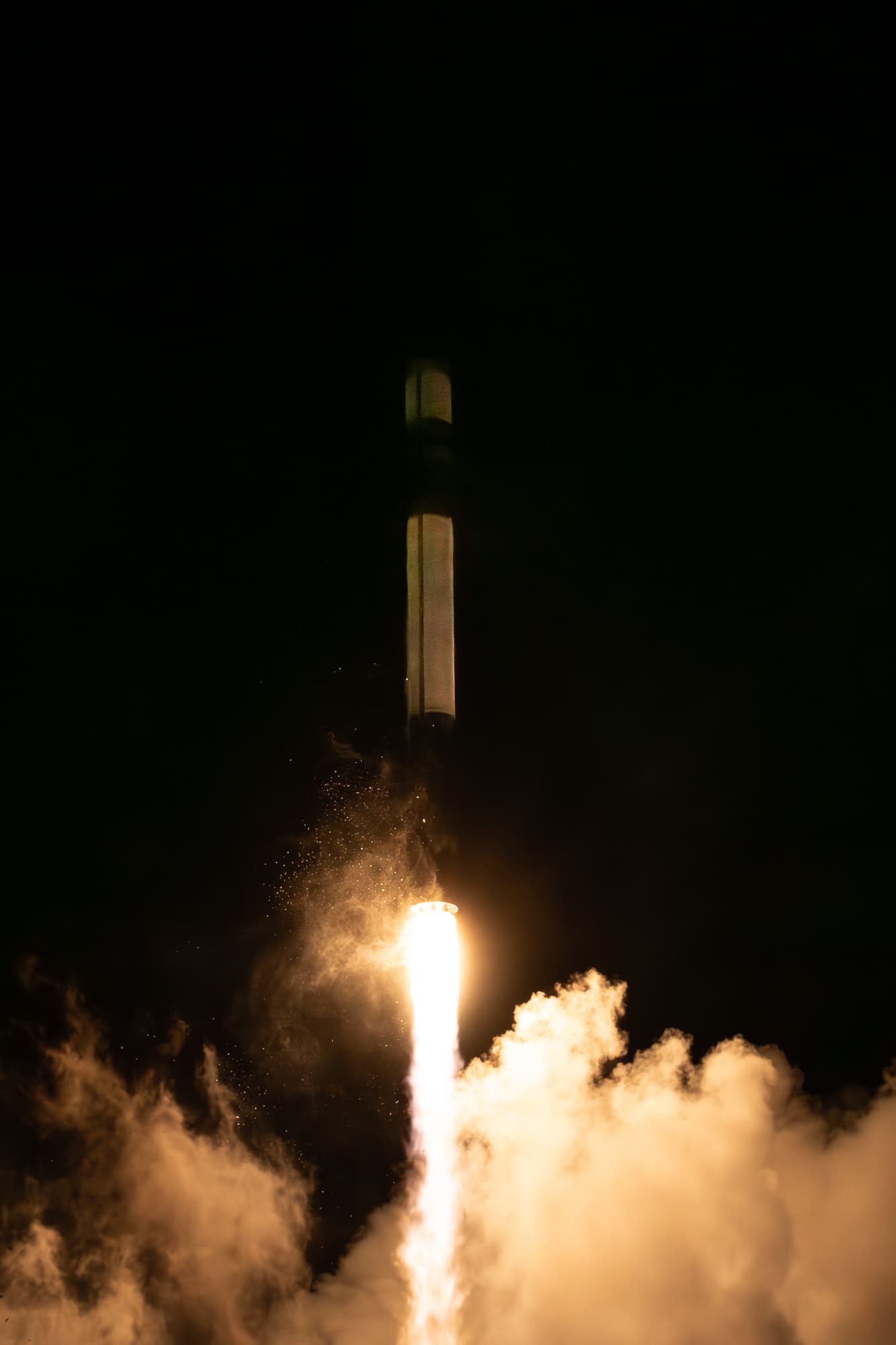
The University of KwaZulu-Natal's aerospace institute has flown a rocket engine and built a launch gantry. What it needs now is money, staff, and a customer base that no African launch provider has ever had.
Two hundred kilograms. That is the payload the University of KwaZulu-Natal's Aerospace Systems Research Institute (ASRI) wants to be lifting into a 500-kilometre orbit from South African soil by 2030 — on a rocket it built, powered by an engine it designed, launched from a stretch of the Western Cape coast that has never sent anything into space.
No African country has ever launched a satellite from its own territory. Every African-owned satellite in orbit — and there are more than 60 now, according to Space in Africa's tracking — got there on a Russian, European, American, Indian or Chinese rocket, from a foreign launch pad, on a foreign schedule. ASRI's pitch is that this does not have to remain true, and it has spent sixteen years building toward the moment it can prove it.
Prof Glen Snedden, who leads the institute, told TechCentral this week that the timeline runs in two steps: a suborbital sounding rocket capable of touching space by 2028, then an orbital satellite launch vehicle by 2030. Both dates, he was careful to add, are conditional. "Timelines and funding are highly related," he said. "For an orbital launch, we have 2030 as a target."
The engineering case for taking ASRI seriously is more advanced than the funding case. The institute's Phoenix hybrid rocket has flown eight times from the Denel Overberg Test Range near Arniston, including a 2021 flight that reached 17.9 kilometres and broke the African altitude record for a hybrid rocket. A permanent launch gantry, six storeys tall when raised, went up there in 2024 — deliberately oversized, a government minister said at the time, for what comes after. And in June, ASRI hot-fired Able, a demonstrator version of its Saffire liquid-fuel engine, producing 18 kilonewtons of thrust from liquid oxygen and jet fuel. UKZN has called it one of the most powerful student-built liquid rocket engines ever produced. The full-scale version, designed for 27.6 kilonewtons, is still being assembled — its regeneratively cooled combustion chamber is currently coming off 3D printers at several vendors, Snedden said, before final testing later this year.
The design target for the finished vehicle is a two-stage rocket built around a cluster of Saffire engines, burning liquid oxygen and kerosene, aimed at the same payload class as Rocket Lab's Electron — the New Zealand-launched, American-owned rocket that has become the default ride for small satellites since 2017 and now flies from three pads across two countries. ASRI is explicit about the comparison. It is also explicit about the gap: Rocket Lab has completed more than ninety launches. ASRI has completed zero orbital launches, using a rocket that does not yet exist.
What stands in the way is not, by Snedden's account, physics. It is headcount and cash. The institute currently employs around twenty people, sixteen of them engineers as of the most recent count. Getting to an operational launch company, he estimates, requires at least 120 — a sixfold increase that a university research institute cannot absorb through its normal structures. The government has committed R100 million for the 2026–2027 financial year through the Department of Science, Technology and Innovation; the full programme, on a 2023 estimate that Snedden says is now overdue for revision, was projected to cost roughly R3 billion. "Everything we have achieved to date has cost less than that," he said of the current allocation — a line that reads as pride in efficiency and as an acknowledgment of how much further the money has to stretch.
The response has been to step outside the university rather than wait inside it. In October last year, ASRI signed an exclusive agreement with Mura Space, a private South African company, to commercialise the sounding-rocket facility at Overberg — opening the gantry to international teams running their own suborbital campaigns, some aiming for the 100-kilometre Kármán line that marks the internationally recognised edge of space. Those are flights on ASRI's launchpad, not ASRI's rockets, and as of this month neither party has reported one taking place. Separately, ASRI is in early talks with the developers of the Cape Winelands Airport about a rocket assembly facility nearby — discussions that Corné Schutte, an engineering dean at Stellenbosch University, has publicly cautioned amount to "intent rather than a prospectus," not committed infrastructure.
The commercial logic, if the funding and staffing gaps close, is real and specific to where the rocket would launch from. Overberg's location gives it a clean shot at polar and sun-synchronous orbits — the paths favoured by earth-observation, weather and agricultural-monitoring satellites — a launch geometry that Cape Canaveral and most equatorial-belt spaceports cannot offer as cleanly. South Africa's own satellite manufacturing cluster, centred on Stellenbosch and Somerset West and home to companies including Dragonfly Aerospace and Simera Sense, is a plausible first customer base sitting less than 150 kilometres from the launch site. A domestic launch option would mean South African-built satellites no longer queue for slots on foreign manifests set by someone else's priorities.
That is the case for why an African launch vehicle would matter if it flies. It says nothing about whether it will. Snedden's own framing is unusually candid for an institute pitching for money: the goal is not simply to build a rocket, but to build the industrial base — the suppliers, the export-control compliance, the trained workforce — that a rocket company actually needs to survive past its first launch. "There are currently no rocket launch skills available for hire in the South African market," he said, "and as a result we have to develop these skills." That is a statement about a sixteen-year head start. It is also a statement about how much runway is still ahead of a rocket that, as of this week, exists mostly as a demonstrator engine and a target date.
