In a Zambian cotton field, the real school-fees fund
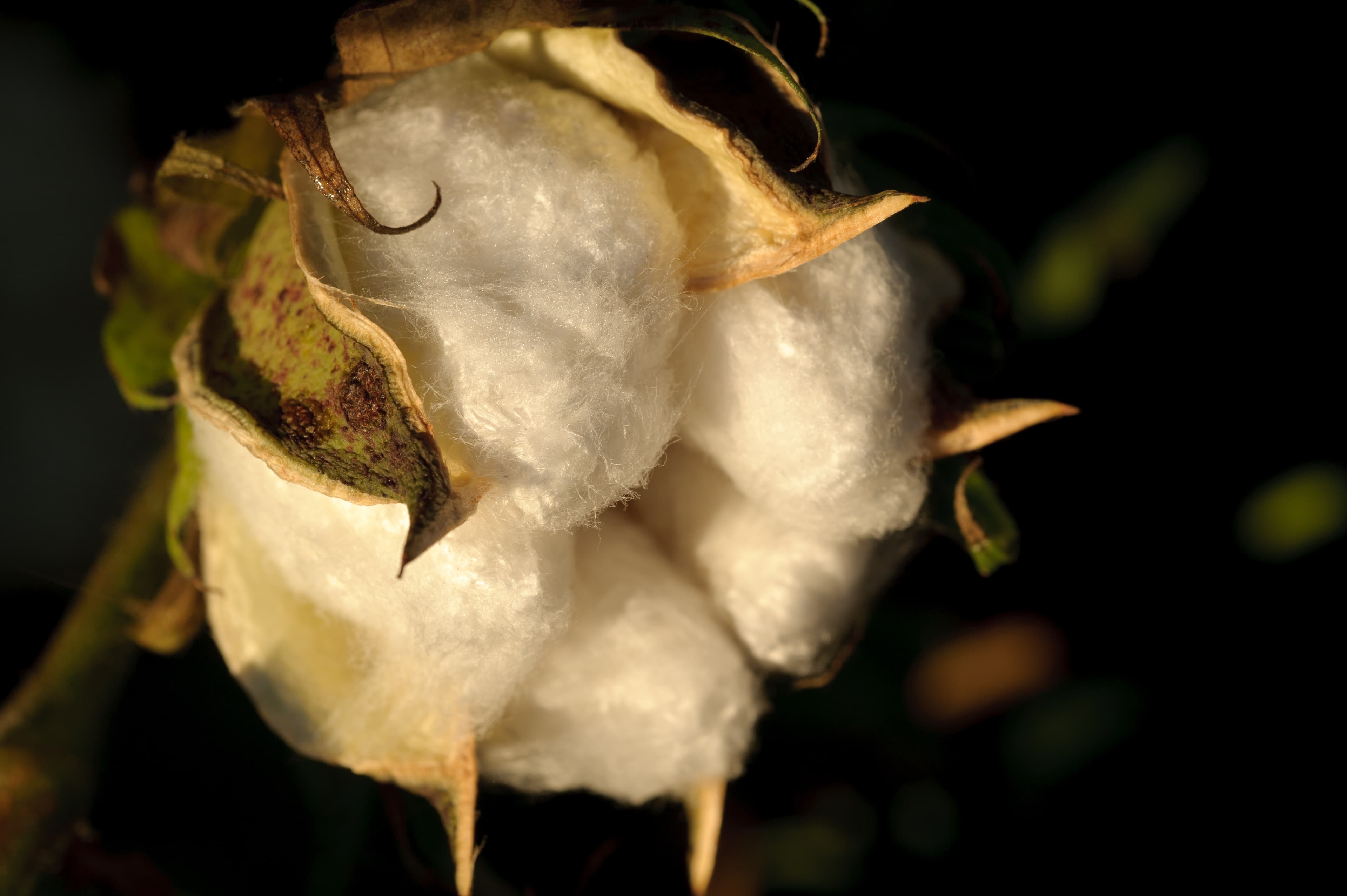
In Mazabuka's Dumba settlement, families call cotton their bank: unlike maize, it pays in cash on delivery, and that cash keeps children in classrooms even when free-tuition policy meets a rural economy with almost no other income calendar.
The maize in Benita Mainga's field failed in the 2023-2024 drought, the same one that dried up harvests across Southern, Central, Eastern and Western Zambia and pushed the government to declare a national disaster. Her cotton did not. Deep-rooted and more tolerant of erratic rain, it kept producing, and when she delivered it to the buyer, she was paid on the spot. That payment, not any government grant, is what has kept her children in school.
In Dumba, a farming settlement in the Magoye area of Mazabuka District, roughly 125 kilometres south of Lusaka, farmers describe cotton in one word: bank. Maize is the food crop. Cotton is the cash crop, and the distinction matters more than it sounds like it should, because in rural Zambia the gap between those two categories is often the gap between a child sitting an exam and a child sitting at home.
Zambia abolished school fees in January 2022, and the effect on enrolment has been dramatic: nearly 6.83 million learners were enrolled in 2025, according to the Ministry of Education's own 2025 Education Statistics Bulletin, up from about 6.53 million the year before. Early childhood education alone accounted for 706,049 of those children; primary schools carried roughly 4.69 million, and secondary schools about 1.43 million. But free tuition was never the same thing as free schooling. Uniforms, shoes, exercise books, bags and transport were never covered by the policy, and for a family with no salary and no harvest to sell, those costs can be the difference between attendance and absence. UNICEF estimates that some 800,000 school-age children in Zambia remain out of school altogether — a figure that includes children who never enrolled as well as those who dropped out, and should not be read as proof that income alone explains it. But in farming communities like Dumba, income is very often the deciding factor in whether a uniform gets bought this term.
What makes cotton the preferred crop is not yield or price — farmers in Dumba are candid that both could be better — but timing. Chompya Balewa, who paid university fees for two of his children this year from cotton proceeds, put the arithmetic bluntly: during the recent drought he harvested 1,000 kilograms of cotton, sold to feed his household, against just 20 bags of maize. "Right now the maize marketing season has not yet started," he said, "but for cotton we have already delivered, and we have been paid." Maize sold to Zambia's Food Reserve Agency can take months to convert into cash; cotton, sold under contract-farming arrangements in which companies advance seed and chemicals against the eventual harvest, pays out the moment the scale reads a number. Concelia Kalumba, who has grown cotton since 1990, and Vista Bautu, a member of the Cotton Development Trust since 2015, both describe the same pattern spanning three and a half decades: whatever else changes, cotton is the crop that turns into a school fee fastest.
This is not a story a ministry press release would tell on its own, and it should not be mistaken for one. Vladimir Chilinya, country coordinator for the human-rights group FIAN Zambia, frames it as two policies meeting in the same field: "When you visit Magoye, you see many children attending school because of the free education policy but also because their parents are earning income from cotton." Neither factor alone explains the enrolment numbers. The free-tuition policy removed the largest fixed cost of schooling nationwide; cotton income is what covers what remains, and it does so unevenly, concentrated in the seven provinces — Eastern, Central, Southern, Muchinga, Luapula, North-Western and Western — where the crop is grown at scale, according to the Ministry of Agriculture.
The growth case here is not really about cotton acreage, which the Cotton Board of Zambia says already runs short of what domestic and export buyers want to buy. It is about what happens to that crop after it leaves the farm gate. On 16 April 2026, President Hakainde Hichilema reopened the Zambia-China Mulungushi Textiles plant in Kabwe, dormant for nineteen years, backed by a $140 million joint-venture investment that replaced roughly 80 percent of its machinery. For two decades, Zambian cotton has left the country as a raw commodity and returned as finished cloth, with the value added captured by spinners and weavers in Asia rather than by the farmers of Magoye or the workers of Kabwe. The reopened plant, still ramping toward full capacity and initially anchored by a government directive that the Health and Defence ministries buy their uniforms locally, is a first, modest attempt to close that loop domestically. The Ministry of Agriculture's own framing is unambiguous about the stakes: "The revival of textile manufacturing offers Zambia an opportunity to move beyond exporting raw cotton and instead create jobs through value addition and industrialisation."
None of that has reached Dumba yet, and it may not for years. What has reached Dumba is simpler and, for now, more urgent: a crop that pays in cash, on the day it is sold, in a country where the difference between a child in uniform and a child at home is frequently a matter of weeks, not years. "Cotton is a cash crop, and no matter what happens, I will continue to grow it," Mainga said. "I always know that with cotton I will have money for my children's school fees." Her one appeal to the companies that buy it — better seed, given how much farmers already spend on inputs like weed killer — is a request for the system to work slightly better, not a complaint that it does not work at all. In a season when the rains failed and the maize field produced nothing, that is not a small distinction.
