A Ghanaian student built AI glasses so blindness doesn't cost $1,900
A Pentecost University student in Ghana built AI-powered smart glasses and an obstacle-detecting cane companion for blind users, priced in cedis, not the $1,900 global standard, and tuned for Ghanaian accents and currency.
One thousand nine hundred dollars. That is the entry price for Envision Glasses, one of the best-known AI-powered wearables built to help blind and visually impaired people read text, recognise objects and move through the world with more independence. A cane-mounted alternative, WeWalk, starts above $600. For most of the roughly 26 million people living with significant visual impairment across Africa, per the World Health Organization's regional office, that price tag alone puts the technology out of reach before a single feature is even tested.
Emmanuel Quartey, a Ghanaian engineering student, is building a cheaper answer, and pricing it in cedis rather than dollars. His platform, Steward Vision Assistant, currently sells for 2,000 Ghanaian cedis, roughly a tenth of the Envision Glasses starting price, and pairs AI smart glasses with a handheld ultrasonic obstacle detector, according to TechCabal's August 4 feature on the project, based on an on-record interview with Quartey.
The idea began with a smaller loss. In February 2024, Quartey temporarily lost hearing in one ear. He was a second-year information technology student at Pentecost University in Ghana at the time, already experimenting with computer vision after several years building automation and agricultural-technology projects. A friend's question, imagine it was your eyes, what would you do, sent him toward a demonstration for Angela Kona, a visually impaired woman, using an early prototype that could recognise currency and pull text from printed pages. Watching her use it, Quartey told TechCabal, convinced him the project needed to become more than a class exercise.
Why a global product missed the Ghanaian cedi
The gap Quartey identified wasn't just cost. It was localisation. When we looked at some of the existing smart glasses, the currency detection didn't even include the Ghanaian cedi, he told TechCabal. If a Ghanaian bought those glasses, one of the most important features simply wouldn't work. Voice-recognition models built for American or British accents also struggled with African speech patterns, he found, a familiar failure mode for imported consumer technology across the continent. Steward's team is training its models on Ghanaian accents first, with Twi, Ga, Hausa and Swahili planned next.
That gap is structural, not incidental. A Stellenbosch University review commissioned by the Mastercard Foundation, which TechCabal reported on in June, found that sub-Saharan Africa still imports more than 90 percent of its assistive technology, and identified only 42 manufacturers or innovators building such products anywhere on the continent. West Africa, Nigeria, Ghana, Sierra Leone and Senegal among them, accounted for just five of those 42, despite housing some of the region's largest economies. East Africa, by contrast, was home to 19. Steward is a small, single-founder counterweight to that imbalance, built in one of the very markets the report flagged as underserved.
A companion, not a replacement
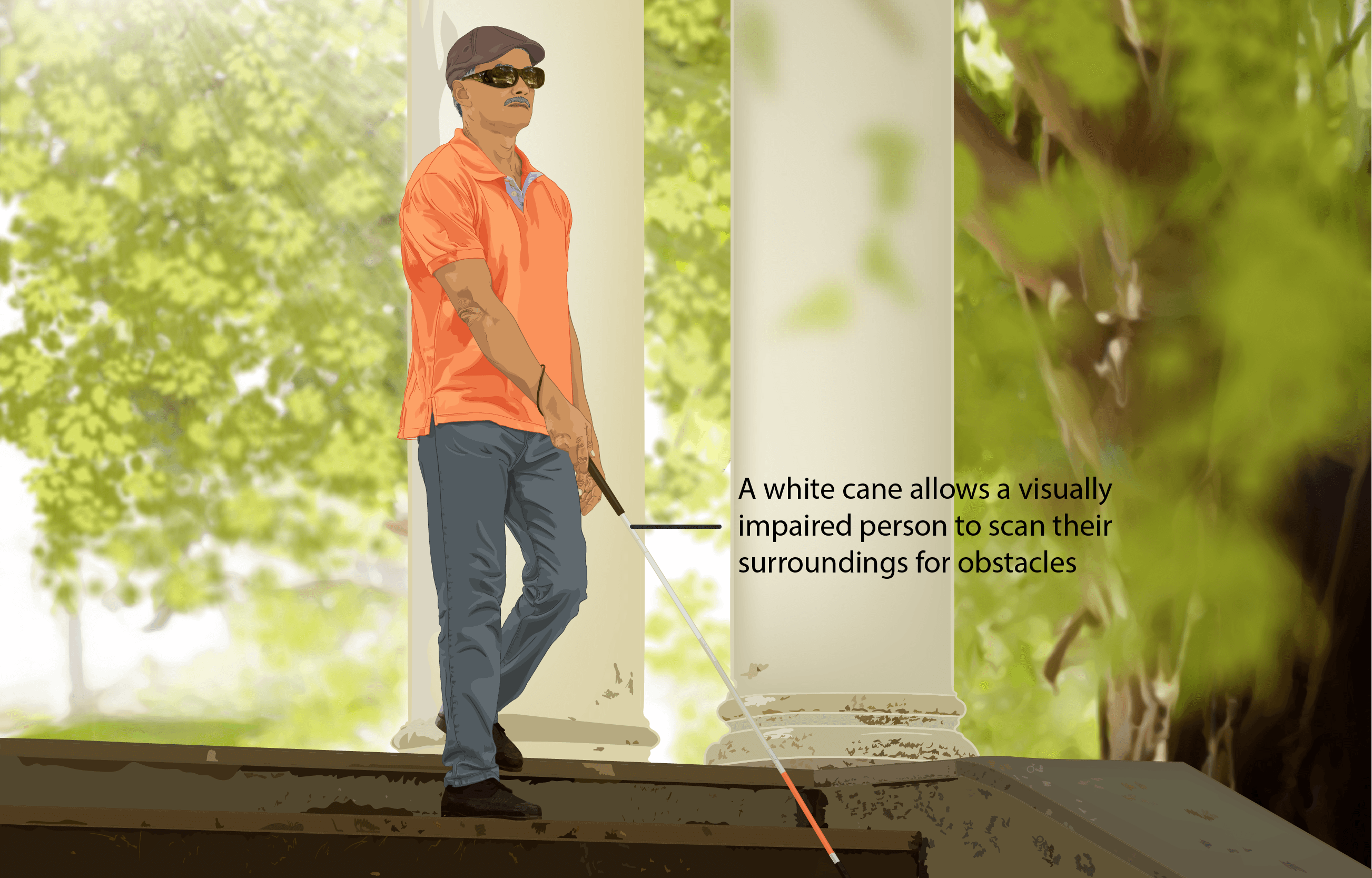
Quartey's handheld device, which uses ultrasonic sensors to flag obstacles a cane can miss, hanging signposts, low tables, protruding branches, was originally designed to replace the white cane entirely. User testing with the Ghana Blind Union changed his mind. The white cane actually does much more than I thought, he said. It gives tactile feedback that technology cannot easily replace. The device was repositioned as a companion tool instead, layering additional obstacle detection above what a cane already provides, a small but telling example of engineering deferring to the people who will actually use the product.
The glasses' most unexpected hit, according to Quartey, wasn't currency recognition or text-reading at all. Users who had lost their sight after forming friendships used the environment-description feature to hear what those friends looked like for the first time, sometimes discovering the mental image they had carried was wrong. It is a use case no product spec sheet would predict, and one that speaks to what affordable assistive technology is actually for.
Quartey self-funded his early prototypes by teaching robotics classes, and reinvested prize money after he and Kona won Ghana's Disability Inclusive Hackathon in November 2024. Funding remains the single biggest barrier cited by African assistive-technology entrepreneurs, according to the advocacy group AT4D, which is precisely why a working, field-tested, three-figure-cedi device out of a university dorm room is worth taking seriously, well before it scales.
