South Africa rebuilds SIM registration around real-time ID checks
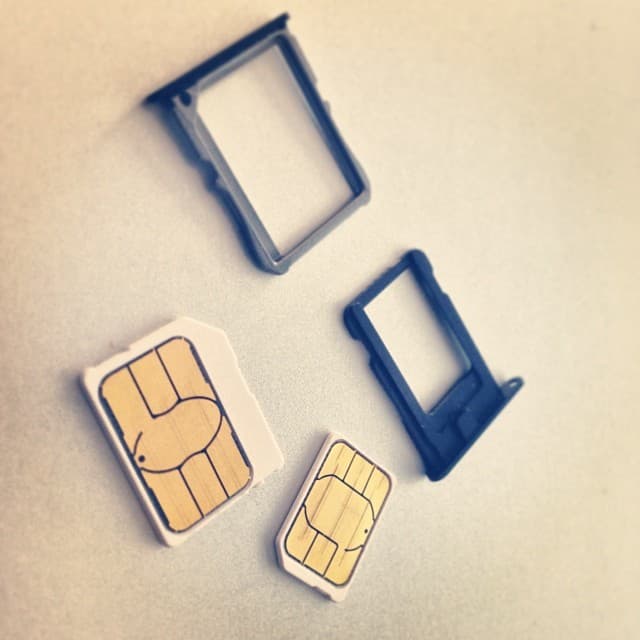
Two decades after RICA first made SIM registration compulsory, South Africa's telecom industry and Justice Ministry are overhauling the system to verify registrants against the Home Affairs database in real time, after fraud investigators linked improperly registered SIMs to extortion, cash-in-transit heists and money laundering.
A South African mobile number now unlocks far more than calls and texts. It is the key that banks use to send one-time passwords, the credential WhatsApp and mobile-money apps lean on to confirm a user is real, and the thread investigators pull when they trace a crime back to its source. For nearly twenty years, the law meant to keep that thread reliable — the Regulation of Interception of Communications and Provision of Communication-Related Information Act, or RICA — asked for little more than an ID document waved at a SIM-shop counter. That system is now being rebuilt from the ground up.
South Africa's telecom operators and the Department of Justice and Constitutional Development have developed a new verification framework that checks every SIM registration in real time against the Department of Home Affairs identity database — the same infrastructure banks already use to confirm who they are dealing with. Nomvuyiso Batyi, chief executive of the Association of Communications and Technology, told TechCabal on July 18 that the shift moves the test from "did this person present an ID" to "is this person actually who that ID says they are." Two decades of RICA, she said, were built for a different kind of fraud than the one South Africa faces today.
The urgency traces to a March 26 meeting convened by Justice Minister Mmamoloko Kubayi under the Justice, Crime Prevention and Security Cluster, according to the department's own published statement. Police investigators told that meeting that improperly registered SIM cards had been linked to banking fraud, cash-in-transit robberies, extortion, contract killings and kidnappings — and, separately, The Citizen reported that unregistered SIM cards feature in roughly two-thirds of extortion cases currently under investigation. Two enforcement operations gave the warning teeth before the policy did: a 2024 sweep in the Free State that broke up a ring selling pre-RICA'd SIM cards, and a 2025 operation in KwaZulu-Natal that led to 48 arrests for registering SIMs under false identities.
The deeper anxiety is financial, not just criminal. South Africa's 2023 grey-listing by the Financial Action Task Force put a spotlight on how anonymous communications channels can be quietly repurposed for money laundering, and Home Affairs Minister Leon Schreiber has pointed to his department's identity-verification systems — already load-bearing for the banking sector — as the missing link that could make a phone number as trustworthy as a bank account. The government's own statement ties the reform directly to South Africa's preparation for an international evaluation on financial-crime and terrorism-financing controls due in October 2026.
What won't change, at least not yet, is the experience of buying a SIM card. Batyi said the industry has not disclosed the technical mechanics of the new checks and that a consumer awareness campaign will explain any changes once the framework is finalised; enforcement of the existing RICA penalties — fines of up to R5 million, or prison terms of up to ten years for non-compliance — formally began on July 1, 2026, ahead of the deeper systemic fix. Proposals to strengthen Section 40 of RICA, the clause governing registration integrity, have already gone to the Department of Justice.
The reform's real significance sits a layer beneath telecoms. Africa's fastest-growing digital economies — from mobile money in Kenya to instant-payment rails in Rwanda and Nigeria — all rest on the assumption that a phone number reliably identifies one person. Where that assumption breaks, so does the fraud model regulators built around it: SIM swaps hijack bank accounts, pre-registered SIMs launder illicit cash, and stolen identities move through a network built to trust a piece of plastic more than the person holding it. South Africa is not alone in confronting this; it is simply the latest and most explicit example of a continent-wide reckoning between mobile identity and the financial infrastructure now built on top of it. Getting the fix right — without making it harder for legitimate customers to get connected — will be the harder trick than passing the law.
