Africa just switched on its 50-millionth new light — and the pace is finally quickening
Mission 300, the World Bank and African Development Bank drive to end energy poverty, has connected more than 50 million people across 40 countries and is now electrifying Africa at nearly double its starting speed. Tanzania alone added 7.5 million. The real story is the flywheel behind the number.
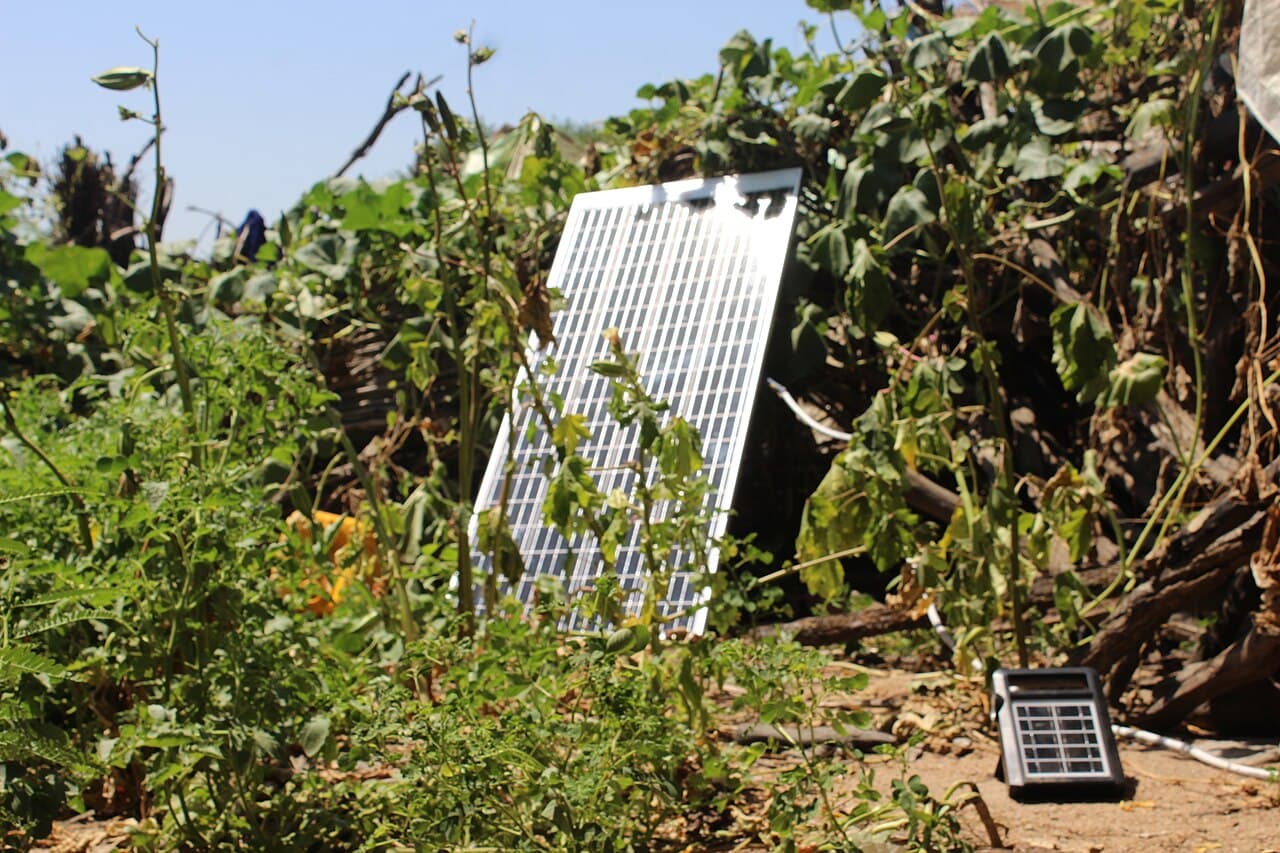
In a village near Mongo, in central Chad, a single solar panel bolted to a mud-brick wall now does what the national grid never managed: it keeps a light on after dark. Multiply that panel by tens of millions of households, clinics and workshops, and you have the quiet arithmetic behind one of the most consequential numbers in African development this year.
More than 50 million people across 40 African countries have gained access to electricity under Mission 300, the World Bank Group and African Development Bank Group announced from Cape Town on June 16. It is a milestone against a stark backdrop — roughly 600 million people in sub-Saharan Africa still live without power — but the figure that matters most is not the headline total. It is the acceleration underneath it.
Mission 300 is now delivering access at nearly double the pace it managed at launch. That shift, from a standing start in 2024 to a fast-compounding rollout in 2026, is the difference between a well-meaning pledge and a movement that might actually hit its target: 300 million people connected by 2030.
The number that reframes it
Big electrification promises are not new in Africa; keeping them is. What separates Mission 300 from a decade of stalled targets is that the curve is bending the right way. In Tanzania, 7.5 million people have been connected under the initiative — a five-fold jump over the country's average annual pace before Mission 300 arrived, on the back of heavier financing and firmer policy commitment. In Ethiopia, 4.6 million have come online, helped by reforms that made a grid connection something a household could actually afford.
Those two countries alone account for a quarter of the total, and they illustrate the method. Mission 300 invests across the entire energy value chain — generation, transmission and, crucially, last-mile distribution — rather than betting on any single fix. The result is a blend of on-grid extensions and off-grid solar: substations and power lines where they make sense, and stand-alone solar kits and mini-grids where the grid will not reach for years, if ever.
Why the pace doubled
The honest answer is coordination, not a technological breakthrough. Solar panels and pay-as-you-go meters already existed; what was missing was alignment. Past electrification pushes tended to run in parallel — a donor here, a utility there, a ministry somewhere else — each optimising its own slice. Mission 300's organising idea is to point governments, development institutions and private investors at a single roadmap with shared targets and committed money.
The financing tells the story of how much weight is now behind it. The African Development Bank and the World Bank have committed close to $15 billion to Mission 300-related projects and drawn in roughly $4.5 billion in co-financing, while other development partners have pledged more than $7 billion for the continent's energy sector. Launched in 2024, the initiative is backed by a coalition that includes The Rockefeller Foundation, the Global Energy Alliance for People and Planet, and Sustainable Energy for All.
That alignment does something subtle but powerful: it lowers the perceived risk for private capital. When a government's policy direction, a multilateral's balance sheet and a philanthropy's guarantee all move in the same direction, the electricity connection that once looked commercially marginal starts to pencil out — and private operators lean in rather than wait.
Here is the compounding logic Himilo Post reads into it, and it is our interpretation rather than a claim in the announcement: energy access is not a single win but the input to every other one. A connected clinic can refrigerate vaccines; a connected workshop can run a welder past sunset; a connected school can teach after dark; a connected village becomes a market for the very solar companies that lit it. Each connection widens the base for the next, which is why a doubling of pace early in the curve matters far more than the raw 50-million figure suggests. Africa adds roughly 12 million young people to its workforce every year, and none of the jobs they need materialise in the dark.
The distance still to go
Realism belongs in this story too. Fifty million is one-sixth of the 2030 goal, reached in the initiative's easier early phase; the households still unconnected are, almost by definition, the hardest and most expensive to reach — remote, low-income, and in some cases in conflict-affected areas where costs run far higher. The World Bank's own market analysis has warned that a step-change in public funding is needed to finish the job on off-grid solar alone. A doubled pace is necessary; on current arithmetic it is not yet sufficient.
But for the first time in a long time, the trend line and the target are arguing on the same side. The panel on that wall near Mongo is not a symbol of what Africa lacks. It is one of 50 million small proofs that the switch, at last, is being thrown faster than before.
Mission 300 is a joint initiative of the World Bank Group and the African Development Bank Group. Figures reported here are drawn from the two banks' joint statement of June 16, 2026.
