Uganda breaks ground on Africa's first privately financed power line — a template for the continent's grid problem
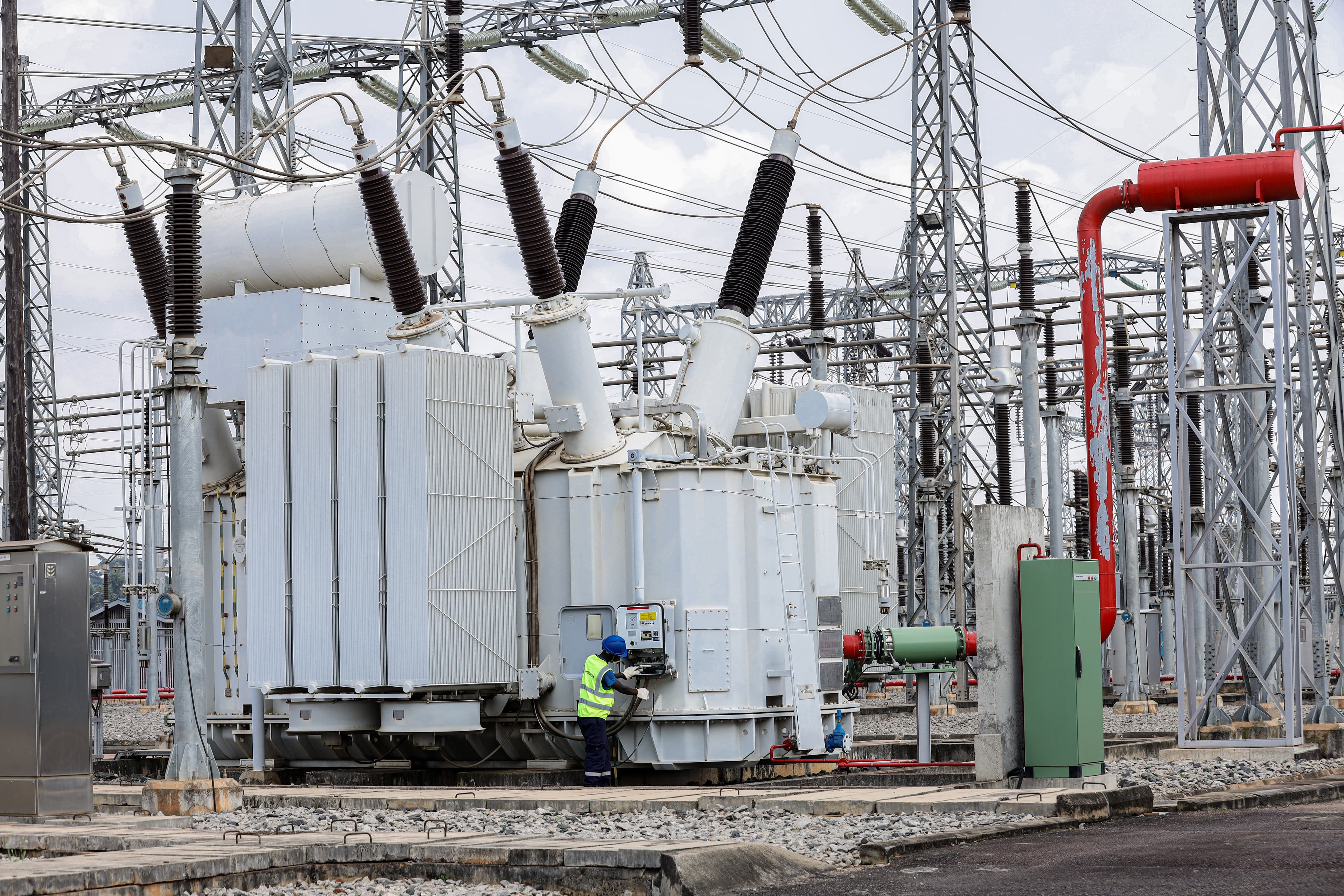
Uganda's $50 million Amari project is the first independent transmission project in Africa to reach financial close and enter construction. The line itself is small; the private-capital model behind it may be how the continent finally builds the grid its generation boom cannot reach without.
Africa's energy debate is almost always about generation — new dams, solar farms, gas-to-power plants, a first barrel of oil. But a quieter milestone in Uganda points to the constraint that decides whether any of that reaches a home or a factory: the wires in between.
What happened
Gridworks, a transmission-and-distribution developer owned by British International Investment — the UK government's development finance institution — has reached financial close on the $50 million Amari Power Transmission project in Uganda and moved it into construction. According to the developer and reporting by Energy News Network, Amari is the first independent transmission project (ITP) in Africa to reach this stage: a transmission line financed and built by a private sponsor rather than a government budget or a development-bank loan to the state.
The path was deliberate. In early February 2026, Gridworks signed an implementation agreement with Uganda's Ministry of Energy and Mineral Development and a transmission services agreement with UETCL, the national transmission utility, which will take the power the line carries. Financial close followed in March, with Siemens Energy appointed as the engineering, procurement and construction (EPC) contractor and commissioning targeted for 2028. The project will upgrade the transforming capacity of four high-voltage substations at strategic points on Uganda's grid — Tororo (220kV) in the east near the Kenyan border, Nkenda (132kV) in the west at the intended interconnection point to the Democratic Republic of Congo, and Mbarara North and South in the west — easing the flow of power to industrial users and clearing space for more renewable generation and regional trade.
"This is a decisive step," said Gridworks chief executive Chris Flavin, crediting Uganda's government for "promoting and supporting the ITP model." Uganda's energy minister, Ruth Nankabirwa, framed Amari as "a strategic pillar" in modernising the national network and a way to "mobilise sustainable private capital" for the grid.
Why it matters
The numbers behind Africa's power gap are stark. Nearly 600 million people on the continent still lack electricity — about 83% of the world's unelectrified population — and Mission 300, the World Bank and African Development Bank partnership, aims to connect 300 million of them by 2030. On 16 June 2026 the two banks said the effort had reached more than 50 million people across 40 countries. But connections depend on a grid that can actually carry power from where it is made to where it is needed. In much of Africa, that grid is the bottleneck: transmission has long been the poor relation of generation, starved of capital because cash-strapped state utilities carry it on their own strained balance sheets.
That is the problem the ITP model attacks. By letting a private, development-bank-backed developer finance, build and own a line — and get paid through a transmission services agreement with the utility — it moves the balance-sheet burden off the state and unlocks capital that generation projects have drawn for years but transmission rarely has.
The exponential-growth lens
Amari itself is small. Its significance is that it is first — and firsts compound. Reaching financial close forced Uganda to build a regulatory framework designed to attract private finance for future lines, and that framework is reusable. Gridworks alone is already developing a pipeline that dwarfs Amari: a roughly $450 million, 460km line in Mozambique; two Ethiopian projects worth about $400 million combined; further Ugandan lines; and a role in South Africa's inaugural ITP programme, for which its consortium was shortlisted in December 2025. Kenya, meanwhile, has signed a $311 million transmission public-private partnership (PPP) with Africa50 and India's Power Grid Corporation. One bankable precedent lowers the perceived risk on the next, which pulls in cheaper capital, which makes more lines bankable. That is how an asset class is born.
What's next
Construction runs toward a 2028 commissioning, with the Nkenda and Tororo upgrades positioning Uganda for cross-border trade with the DRC and Kenya. The real test is replication: whether other governments adopt the ITP framework fast enough to turn a single closed deal into a continent-wide model. Generation still makes the headlines. But if Africa's decade of new power is to reach its people, the unglamorous work of building the wires — and the financing model that pays for them — may matter more than any single megawatt.
