In Dakar, secondhand fashion succeeds by hiding who sold it
Maket's decision to keep sellers anonymous, not the app itself, is why a Dakar resale marketplace is gaining trust where a European clone failed.
"Que devient votre entreprise le jour où vous n'êtes plus dans la pièce?" What happens to your company the day you are no longer in the room? Étienne Krieger, who has mentored more than a thousand ventures through HEC Paris's Challenge+ programme, put that question to Fatou Dieng in Dakar, and it did more to shape her business than any spreadsheet had.
At the time, Dieng was running Your Personal Shopper, a boutique resale service she had built almost by accident. She had spent thirteen years in banking, first as a credit analyst in the United States, later at Société Générale and Crédit Agricole in France, and had launched YPS in October 2017 as a weekend hobby: sourcing hard-to-find Paris fashion for her sisters and friends back home. It grew into a real business, some clients spending over a thousand euros an order, but it grew around her personally. Her taste, her contacts, her judgment were the product. She tried hiring other personal shoppers; clients wanted her, specifically, or no one. "J'ai dû admettre que je ne pouvais pas me démultiplier," she says — she had to accept she could not clone herself. Krieger's question named the flaw precisely, and by 2024 she had left banking altogether to build its fix: an already half-formed business she had glimpsed inside her own, after clients kept asking her to help resell clothes they no longer wanted.
That became Maket, a Dakar-based marketplace that launched in January 2025 and has since sold more than 700 items across roughly 600 orders, with 42% of buyers returning for a second purchase, according to figures Dieng has disclosed to TechCabal. The company has not published independently audited numbers, and those figures should be read as the founder's own account of early traction rather than third-party verified metrics.
Dieng's first instinct was to copy Vinted, the European resale app, complete with public seller profiles and browsable personal wardrobes. It did not survive contact with the market. Sellers did not want it known that an item had belonged to them, and a survey of more than 200 people found over 80% citing privacy as a concern, most strongly among the public and visible figures whose wardrobes were most desirable but who were least willing to be named as sellers. Underneath the general discretion sat something more specific: maraboutage, the fear that a personal item, once out of its owner's hands, could be used against them spiritually. "Que tout le monde partage cette croyance ou non n'est pas la question," Dieng says. "Elle était suffisamment réelle pour influencer les comportements, donc suffisamment réelle pour façonner le produit" — whether or not everyone believes it, the fear was real enough to influence behaviour, and so real enough to shape the product.
Maket rebuilt itself as the sole intermediary standing between every buyer and seller, who never see or know each other. The company photographs, lists, cleans, disinfects, prices, ships and pays out itself, and backs the digital listing with a physical Dakar showroom — trust infrastructure Dieng says she underestimated needing.
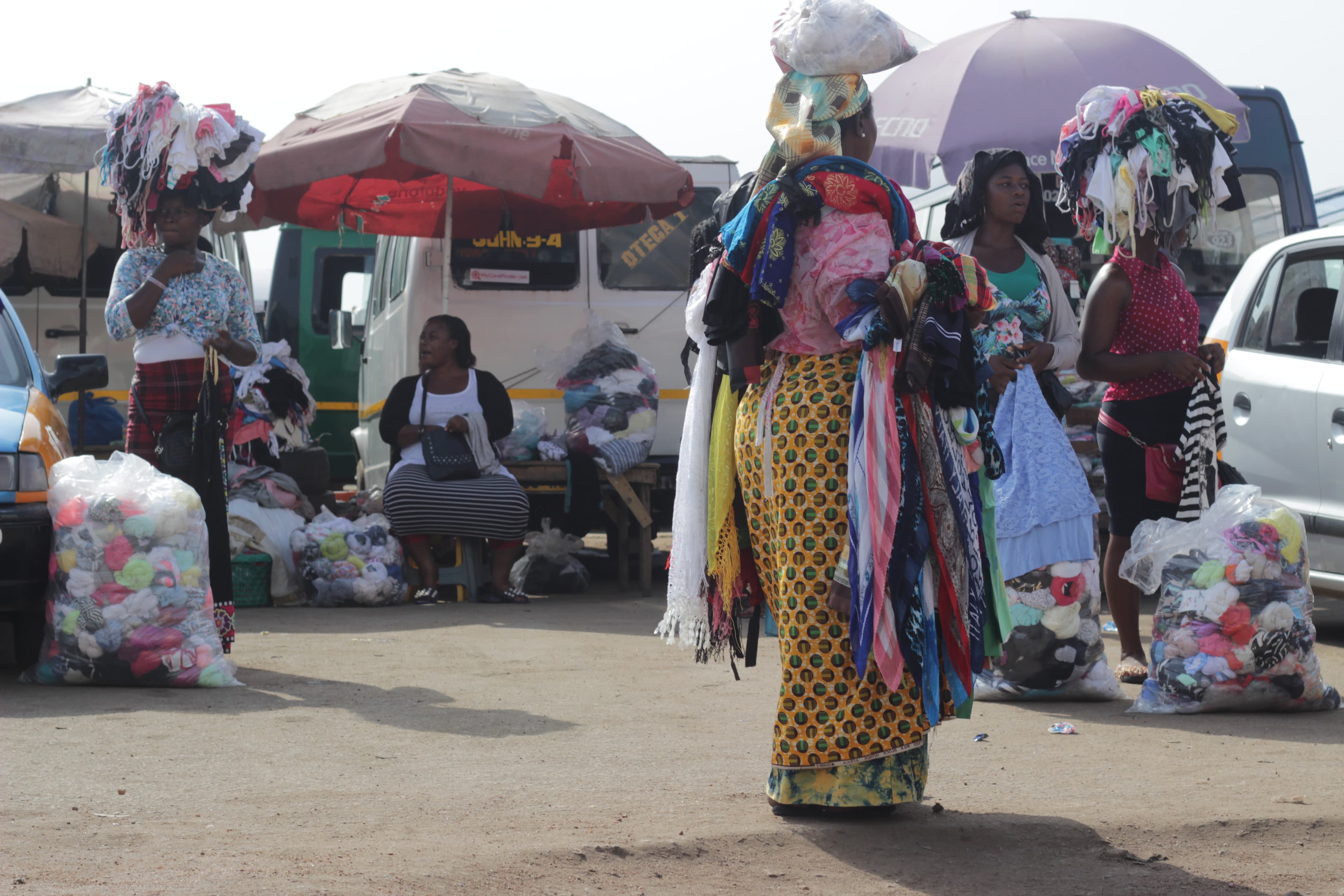
The stakes run wider than one app. Ghana's Kantamanto market absorbs roughly 1,500 tonnes of imported used clothing a week, and nearly half of it becomes waste within days, according to Greenpeace Africa. Uganda's used-clothing imports rose 76% by volume between 2013 and 2022, per the Economic Policy Research Centre. Only 15 of Kenya's 52 textile mills still operate, and those at under half of installed capacity, according to Kenya's own 2024 draft cotton, textile and apparel policy. Much of what the Global North calls charity, and ships south, was never wearable to begin with. Maket's bet is that the fix for that flow is not less resale but a market Africans actually run themselves — one where a wardrobe is capital its owner controls, not a donation bin an ocean away decides the fate of.
Dieng has since taken the model to Station F in Paris, one of two women among eleven founders selected from 143 applicants for a renewable four-month HEC-backed incubation aimed at industrialising Maket's logistics, quality control and payments, and preparing a funding round. The next test of Krieger's original question is not whether the business survives her absence from a room in Dakar, but whether it survives her presence in one three thousand kilometres away.